Why Booking Travel Experiences in India Is Still Hard, and How That Is Changing
You book a flight in four minutes and the thing you actually travelled for at a counter in the dark. Only a third of the world's tours and activities were booked online last year, against two thirds of travel overall. Here is why the experiences layer never digitised, what India adds on top of that, and what is genuinely shifting now.
An Indian traveller can book a Delhi to Kochi flight on a phone in four minutes, pick a seat, pay by UPI and have a boarding pass before the tab closes. The same traveller lands in Kochi, drives to Munnar, and discovers that the one thing they came for runs on a capped daily ticket that was gone by mid-morning.
That gap gets far less attention than it deserves. Booking a flight or a room is close to a solved problem. The actual experience, the safari, the boat, the trek, the train, the viewpoint at sunrise, is still very often bought on arrival, in cash, from whoever is standing at the gate. And the numbers now say this is not an impression. It is the structure of the industry.
What follows is the honest version: how big the gap is, why the supply side never consolidated the way airlines did, the specific extra layer India puts on top, and what has actually started to move in the last two years. Some of it is changing fast. Most of the friction is still there, and knowing where it sits is worth more to a traveller than any packing list.
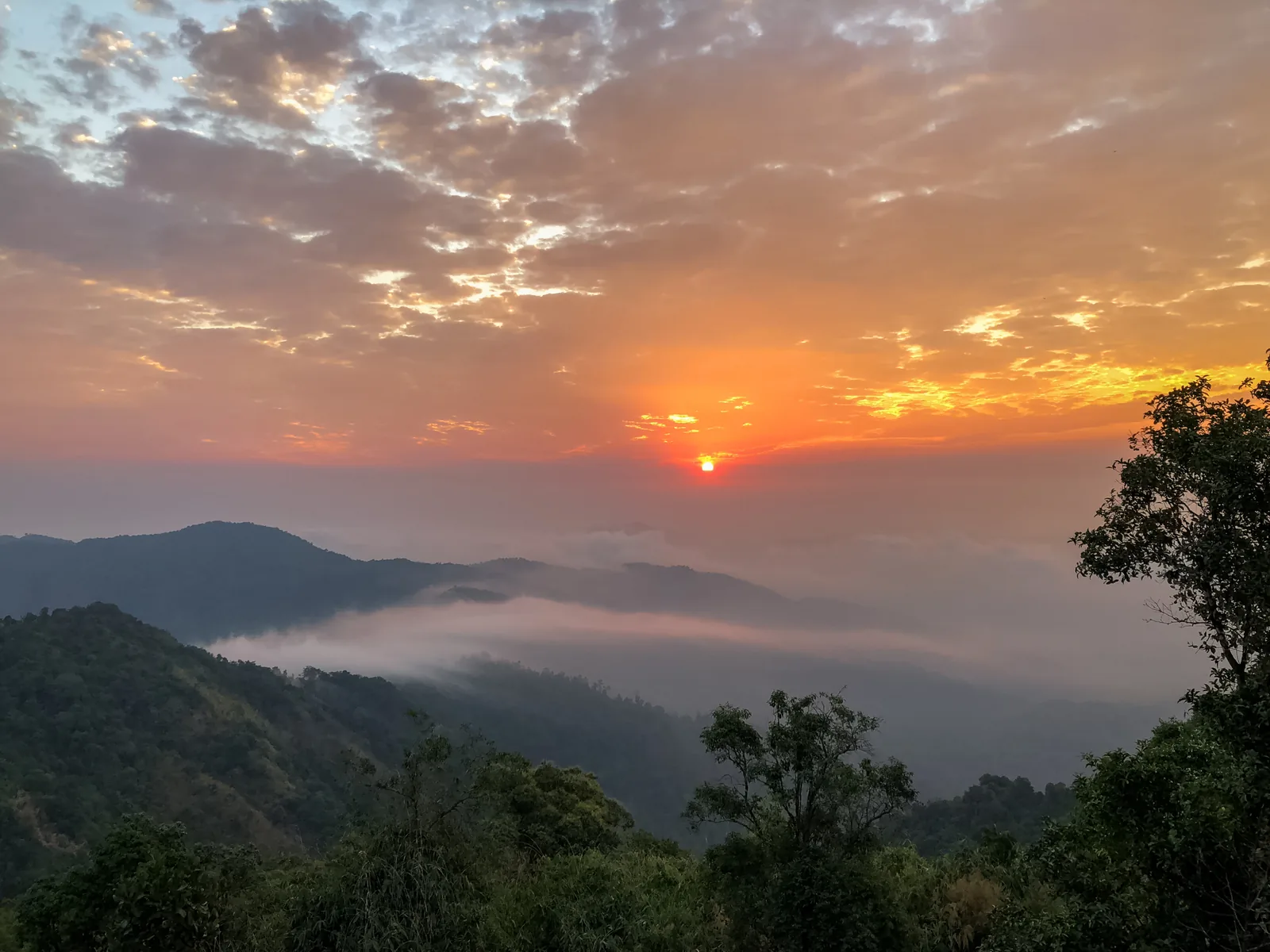
The one number that explains the whole problem
In July 2026, Arival and Phocuswright published Travel Experiences 2026, a market sizing built from a survey of more than 5,600 operators plus their own gross bookings data. One line in it does most of the explaining.
Only 33 percent of tours, activities and attractions were booked online in 2025. For travel overall, the figure was 64 percent.
So the category is roughly half as digitised as the industry it sits inside. And it is not because nobody wants these things. The same research sizes the global experiences market at 253 billion dollars in 2024, a full recovery to pre-pandemic levels, on track for 342 billion by 2029. Experiences bookings grew 17 percent in 2024 against 6 percent for travel as a whole, close to three times the rate.
Demand is running ahead of the rest of travel. Distribution is running well behind it. That is the gap a traveller feels as a queue.
Why this one category never consolidated
Air, hotel and cruise all went through the same sequence: inventory got standardised, then centralised, then sold through a handful of screens. Experiences did not, and the reason is in the supply base.
More than 70 percent of experience operators worldwide are small or micro-businesses, according to the same Arival and Phocuswright research. Think about what that means mechanically. An airline seat is a record in a reservation system that any travel agent on earth can read and sell. A jeep at a stand above Coorg is a vehicle, a driver, a local association rota and a verbal price. There is no record. There is nothing to read.
That has three consequences that travellers run into constantly:
- Nobody holds the inventory. The person who can tell you whether tomorrow is full is often the person standing at the gate, and only in the morning.
- The product is not defined. Two operators selling the same half-day use the same five words and include different things. Comparing them is not possible from a listing.
- The supplier has no incentive to publish. If the morning sells out from walk-ups anyway, building an online booking flow is a cost with no obvious return. This is a rational choice by thousands of small operators, not a failure of effort.
What India adds: the permit layer
Everything above is global. India then adds something the research does not really capture, because it is not a distribution problem at all. A large share of India's best experiences are not sold by a business. They are administered by a government department, and the rules are set for conservation, border security or crowd control rather than for a booking page.
This is the part that actually catches people out, so it is worth seeing the range of it in one place. Every row below is a real constraint on a real place, and each is covered properly in its own guide:
| Place | What is actually in the way |
|---|---|
| Eravikulam, Munnar | Forest department tickets with a capped daily quota, a compulsory shuttle bus, an afternoon cut-off, and two months shut each year for tahr calving |
| Mandalpatti, Coorg | Private cars are not allowed on the final stretch. The morning is settled at a jeep stand in the dark, against a notified fare most visitors have never seen |
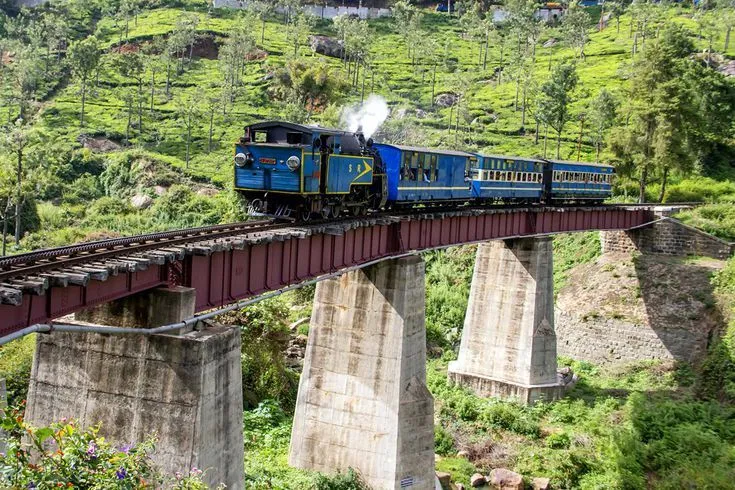
| Nilgiri Mountain Railway, Ooty | A railway reservation quota on India's only rack railway, where the standard advice to book months ahead no longer matches the booking window |
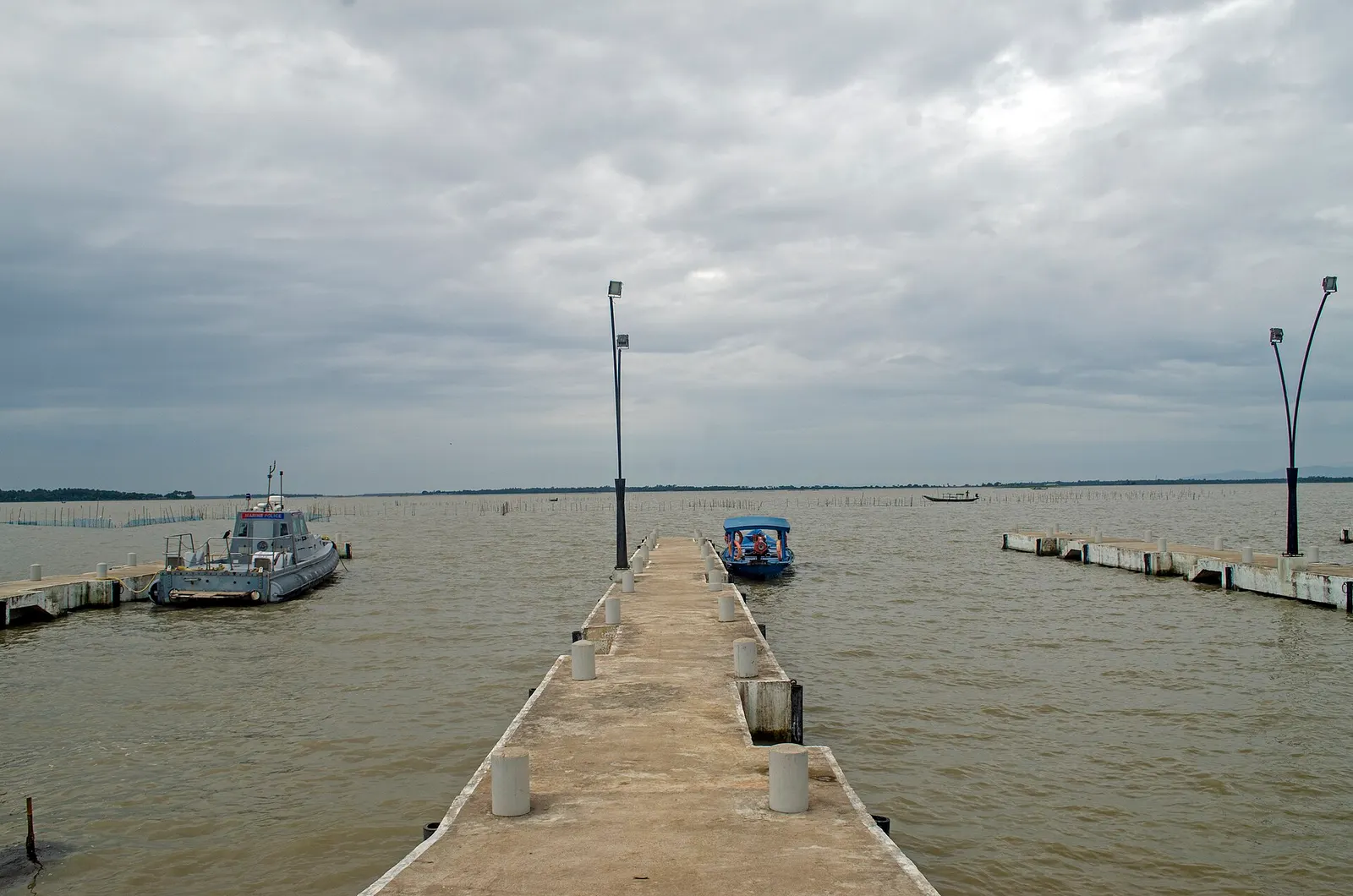
| Alleppey backwaters | A shikara, a day cruise and an overnight houseboat are three different products sold under one word, settled by negotiation at the jetty, under classification and mooring rules |
| Tsomgo and Nathu La, Sikkim | A Protected Area Permit arranged through a registered operator that closes the evening before travel, with Nathu La stricter again and shut on fixed days |
| White Rann, Kutch | A border area permit, plus a season that exists only once the salt dries, plus full moon nights that book out well in advance |
| Kaziranga, Assam | The government permit and the safari jeep are two separate purchases from two separate parties, and the portal that sells the first does not sell the second |
| Chembra Peak, Wayanad | A capped, guided trek gated by a forest counter that opens at 7 am, on a mountain that can be closed at short notice |
Read that list again and notice what it is not. It is not eight examples of the same problem. It is a capped quota, a vehicle restriction, a rail quota, an undefined product, a security permit, a seasonal window, a split purchase and a counter issue. Eight genuinely different mechanisms, in eight states, none of which generalise to the others.
That is the real difficulty. Not that booking activities in India is broken, but that there is no single thing to learn. A traveller who worked out Sikkim's permit system last year learns nothing that helps them at Kaziranga. Each place has to be understood on its own terms, which is exactly the kind of knowledge that does not survive a search result.
The individual guides are the useful form of this: Eravikulam tickets and timings, the Mandalpatti jeep rules, the Ooty toy train, Alleppey houseboats, Sikkim's permit wall, the Rann of Kutch season, Kaziranga safari booking and the Chembra Peak trek.
Four frictions, named
Underneath all of it, the same four things go wrong. Naming them is useful, because a traveller can check for all four before paying for anything, anywhere.
- You do not know who is selling you what. The clearest case is Kaziranga, where a government portal sells park entry and a local jeep association supplies the vehicle. Pay for one and you have a receipt, not a safari. Very few booking pages say which of the two they are selling.
- You cannot see capacity. A capped forest quota, a rail quota and a jeep stand rota are all finite, and none of them publish a live number. The honest answer to "will there be space on Tuesday" is usually that nobody knows until Tuesday.
- The price is not a price. Where a fare is notified, few visitors have seen the notification. Where it is not, it is set by negotiation at six in the morning by the party with all the information. Neither is dishonest. Both are hard to budget.
- The operating information changes and nothing tells you. Seasons shift by a few days on a departmental order. Ranges close. A pass shuts on certain weekdays. The page you read in July may be describing a different place in October.
Why travellers still leave it until they arrive
Given all that, the rational move is to book ahead. Plenty of people do not, and the research is clear that this is a real preference rather than pure procrastination. The figures in this section come from the United States and Europe, so read them as the shape of the behaviour rather than a measurement of Indian travellers.
In the Arival and Phocuswright traveller study, nearly 1 in 5 travellers under 55, and 24 percent of those 55 and over, booked an experience as a walk-up on their most recent trip. Same-day bookings run between 12 and 30 percent depending on age and region, with older travellers booking same-day far more often than younger ones. The report calls this pattern unique to experiences among travel verticals, and it is not hard to see why: you want to see the weather, you want to see how tired everyone is, you do not want a 7 am commitment on day three of a holiday.
The same study found the top reasons for booking in advance are wanting concrete plans locked in and knowing in advance that you wanted the thing, with the fear of selling out close behind. And it found something that matters more than it sounds: travellers who booked experiences booked several per trip, between 3.5 and 4.7 on average. Experiences are not one decision. They are the layer where most of the small decisions of a trip live.
Flexibility is a genuinely good reason to wait. It just does not work against a capped quota, a permit that closes the evening before, or a season that has not started. That is the distinction worth internalising: wait on the things that can absorb waiting, and book the things that cannot.
What is actually changing
This is where the story gets more interesting than the complaint, because the Indian market has started moving on exactly this layer.
Phocuswright's India Travel Market Essentials 2026, published in September 2026, puts India's travel market at 41.7 billion dollars in 2025, up just 1 percent after a 10 percent year. The flat headline hides the shift that matters: online gross bookings rose 4 percent to 24.0 billion dollars while offline bookings fell 2 percent to 17.8 billion, on the report's rounded figures. Online penetration reached 57 percent, and is projected to reach 62 percent by 2029 as the market grows to 59.1 billion.
Three things in that report point directly at the experiences layer:
- The large platforms are moving into tours and attractions. MakeMyTrip took a majority stake in group-tour specialist Flamingo Transworld in March 2026 and is expanding into tours and attractions. Cleartrip added rail in 2026. ixigo moved into short-duration stays. The pattern is platforms filling the parts of a trip they did not previously sell, and activities are one of the biggest remaining gaps.
- AI has moved from inspiration into the transaction. The same report tracks India-based planning startups and incumbent assistants that now handle search, comparison and booking in one flow rather than just suggesting ideas. This matters for experiences more than for flights, because the hard part of an activity was never the payment. It was knowing the rule.
- Discovery has already moved, and booking has not caught up. Travellers are finding places through short-form video and creators well before they find an operating hour or a permit rule. We wrote about that gap in how creators turn a single stay into a destination trend and from reels to bookings. Finding a place has got dramatically easier. Finding its rules has not.
None of this means the friction disappears next season. A forest department will not change its quota because an app would prefer a live availability feed, and it should not. The realistic version of progress is narrower and more useful: the rules become findable, the product becomes defined before you pay, and someone with local standing holds the arrangement that a traveller cannot hold from another state.
What a good experience booking tells you before you pay
This is the practical takeaway, and it works whoever you book through, including us. Before paying for any activity in India, you should be able to answer all six:
- What exactly is included, named. Which vehicle, how many hours, which stops, whose guide, and what is billed to you separately on the day.
- Who holds the permit or ticket, and whether it is already held. Not "we will arrange it". Arranged, for your date, in writing.
- Whether government fees are inside the price or outside it. Both are fine. Not knowing which is not.
- What happens if the place is shut. Seasonal closures, weekday closures and short-notice range closures are normal. A reschedule policy you have read is the difference between a bad morning and a lost day.
- Whether the price is per person or per vehicle. For most Indian day activities the real unit is the vehicle, which changes the per-person maths enormously depending on group size.
- Who to call at 6 am. A number that belongs to someone within driving distance of where you will be standing.
Where GoExplorer fits
We built the day experiences side of GoExplorer against the list above, because it is the list we kept failing ourselves when we travelled.
A day on GoExplorer experiences is a fixed-price day with the vehicle, the driver and the local arrangements handled, written out stop by stop with the timings and the honest caveats included rather than hidden. Where a government fee exists, it stays separate and visible, because pretending a forest department's ticket is part of our price would just be the same confusion with better design. Where a day genuinely needs a local operator rather than a self-drive, the page says so and says why.
Across 29 destinations, the days that are hardest to arrange from outside the state are the ones we spent the most time on: the Mandalpatti sunrise jeep in Coorg, the Eravikulam and Marayoor day in Munnar, the Periyar lake boat and spice day from Kumily, the Tsomgo and Baba Mandir day in Sikkim, the Chembra Peak permit trek in Wayanad, and the White Rann sunset run in Kutch.
What we are not doing is claiming the fragmentation is solved. 29 destinations is a start, not a map of India, and a lot of the country's best mornings are still bought at a counter. The part we think is worth getting right first is the part travellers cannot research their way out of: who is responsible, what is actually included, and what happens when the place is shut.
Start with all experiences, or read how it works if you want the mechanics first. For the wider picture of where Indian travellers are heading, the rise of experiential travel in India and best places to travel in India by season are the two to read next.
Quick answers
- What share of tours and activities are booked online? 33 percent globally in 2025, against 64 percent for travel bookings overall, per Arival and Phocuswright's Travel Experiences 2026.
- Is the experiences market growing? Yes, and faster than travel overall. Bookings grew 17 percent in 2024 against 6 percent for travel as a whole, with the global market on track for 342 billion dollars by 2029.
- Why are activities harder to book than hotels? The supply base never consolidated. More than 70 percent of operators worldwide are small or micro-businesses, so there is no central inventory record to sell from, and in India many of the best experiences are administered by government departments rather than sold by a business.
- Should I book activities before I travel? Book anything involving a permit, a capped quota, a railway, a border or a season. Leave drives, viewpoints, markets and meals until you arrive.
- Why do permits need arranging a day ahead? Protected and restricted area permits are issued against identity documents through registered operators, and several close the evening before travel. Sikkim is the clearest example.
- Are government fees usually included in an activity price? Sometimes, and that is the problem. Ask whether park, permit or entry fees sit inside or outside the price before paying.
- Is the price per person or per vehicle? For most Indian day activities the unit is the vehicle, so group size moves the per-person cost a lot.
- How much of India's travel market is online? 57 percent in 2025, projected to reach 62 percent by 2029, per Phocuswright's India Travel Market Essentials 2026.
- Is anything actually improving? Yes. Large Indian platforms are expanding into tours and attractions, and AI assistants have moved from suggesting ideas to handling the booking. The permit rules themselves are not changing, but finding them is getting easier.
- What is the single most useful question to ask before booking? Who holds the permit or ticket for my date, and is it already held.