Eravikulam National Park: Tickets, Timings and the Rajamala Rules Nobody Mentions
Munnar's best morning is a capped-ticket forest department operation with a 2 pm cut-off, a bus you cannot skip, and two months a year when it is shut. Here is what entry costs, how the online quota works, when the park closes for tahr calving, what you actually see at Rajamala, and how to plan a Munnar day around it.
Most Munnar itineraries list Eravikulam National Park the way they list a viewpoint. Turn up, look at the hills, move on. It does not work like that. Eravikulam is a working conservation area run by the Kerala forest department, entry is capped, the gate stops accepting visitors at 2 pm, your own car does not go past the entrance, and for two months every year the whole tourism zone is closed to the public.
None of that makes it hard. It makes it a thing you plan rather than a thing you wander into. Get the sequence right and you spend a morning on a paved trail at roughly 2,000 m with wild Nilgiri tahr grazing a few metres away and Anamudi, the highest peak in India south of the Himalaya, standing over the whole valley. Get it wrong and you drive 13 km uphill to be told the day is full.
This guide covers what Rajamala is and why it is the only part of the park you can see, what entry actually costs, how the ticket and the forest bus work, the closure window and why it exists, what there is to see once you are inside, the honest answer on Neelakurinji, and how to fit the park into a Munnar day without wasting the rest of it.
Rajamala is not a section of the park, it is the only part you can enter
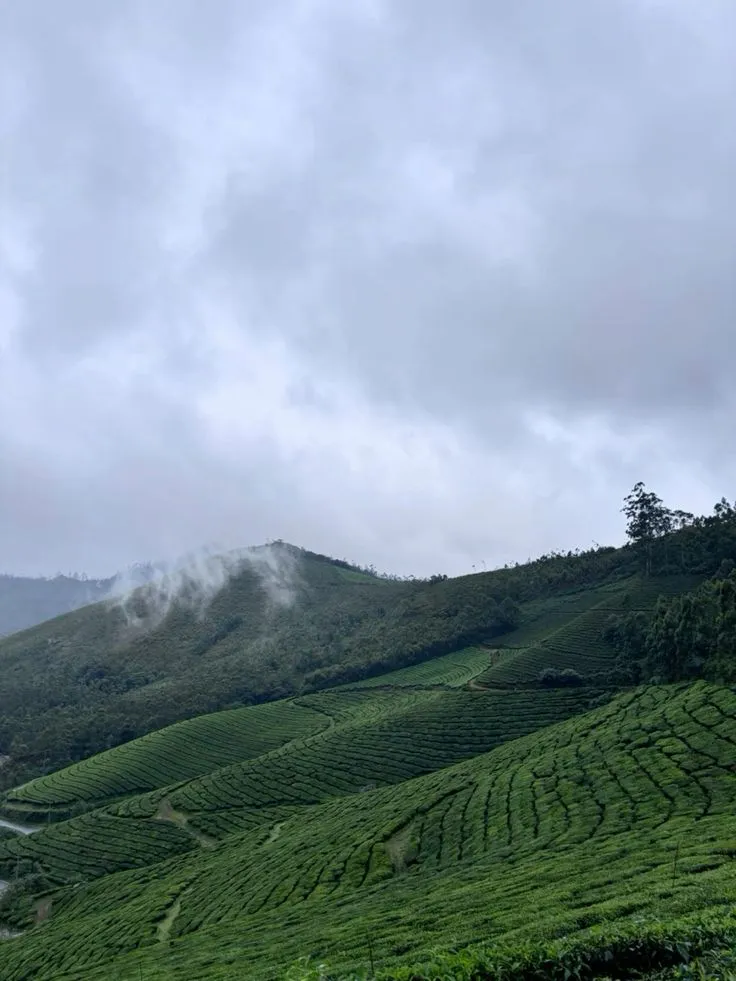
Eravikulam covers about 97 km2 of high rolling plateau in Idukki district and was declared Kerala's first national park in 1978, as Wikipedia's entry records. Almost all of it is closed to visitors. What tourism happens, happens in one zone at the southern edge called Rajamala, about 13 km from Munnar town, and the forest department's own guidance is blunt about the rest: away from two motorable stretches, all movement inside the park is on foot along trails, and those trails are not open to the public.
So when a tour listing says a jeep safari inside Eravikulam, treat it as loose language. There is no game drive here. There is a short, paved, gently climbing walk through shola grassland, and that walk is the product. It is also the reason the tahr are so easy to see: the animals at Rajamala have lived alongside a controlled trickle of people for decades and have stopped treating them as a threat.
The other thing worth knowing early: private vehicles stop at the entrance. The last climb up to the trail is done in a forest department bus, and its ticket is bought at the counter, not from your driver.
What entry costs, and the timing that decides everything
These are the forest department's published figures on the park's official booking system. They are government fees paid at the counter or online, and nobody should be adding a margin to them.
| Item | Detail |
|---|---|
| Entry time | 8:00 am to 2:00 pm |
| Indian adult | ₹200 |
| Foreign national | ₹500 |
| Ordinary camera | ₹50 |
| Video camera | ₹350 |
| Reservation fee | ₹50, at the Munnar information centre counter, 9 am to 3 pm |
| Closure period | February and March, for tahr calving |
| Distance from Munnar town | About 13 km |
The line that catches people out is the first one. 8:00 am to 2:00 pm is the entry window, not the visiting day. The gate stops letting people in at 2 pm regardless of how far you have driven, and on a busy date the day's allocation is gone long before then.
That is why every sensible Munnar plan treats Eravikulam as a first-thing-in-the-morning stop rather than an after-lunch one. A 7 am start from town puts you near the front of the queue with the valley still full of mist, which is also when the light on the grassland is best and the tahr are most active.
How the ticket actually works
Tickets are sold two ways: online through the forest department's own portal at eravikulamnationalpark.in, and in person at the counters in Munnar and Marayoor. The park limits how many people it admits per day, which is the point of a conservation area rather than an inconvenience. Local operators and Munnar guides generally put the daily ceiling at around 3,500 visitors with the majority released online, though the department does not publish the split on its booking site, so treat the number as a reason to book ahead rather than as a guarantee.
Two practical notes from the department's own pages. First, its refund policy is stricter than most travellers expect: cancellations must be made more than 48 hours before your visit date to claim anything at all, you get 50% back if you cancel more than 15 days ahead, and 25% if you cancel between 15 days and 48 hours out. Camera fees are not refundable. Second, the portal has known payment quirks, including trouble with RuPay cards on one gateway, so leave yourself a second card and a little patience.
If you are booking a vehicle for the day anyway, the simplest version is to let the driver handle the counter while you are in the queue, and to have a booking reference already in hand for a weekend or a school-holiday date.
The two months the park is shut, and why
Eravikulam closes to visitors through February and March every year, reopening on 1 April, because that is the Nilgiri tahr calving season and the grassland at Rajamala is where it happens. This is not a maintenance shutdown that quietly runs anyway. The tourism zone is closed.
The reason is worth understanding, because it is also the reason the park is worth visiting. The Nilgiri tahr is endangered and Eravikulam holds the largest single population of it anywhere. When the park reopened in April 2026, officials put the resident count at 841 animals including 144 newborns, according to Onmanorama's reporting. Across Kerala and Tamil Nadu, the synchronised surveys the two states now run jointly have counted the species in the mid-2,000s, which tells you how much of the total sits on this one plateau.
The department can also close the park at short notice in heavy rain, which matters if you are planning around the tail of the southwest monsoon. Anyone selling you a fixed date in Munnar should be telling you what happens if Rajamala is shut on it.
What you actually see at Rajamala
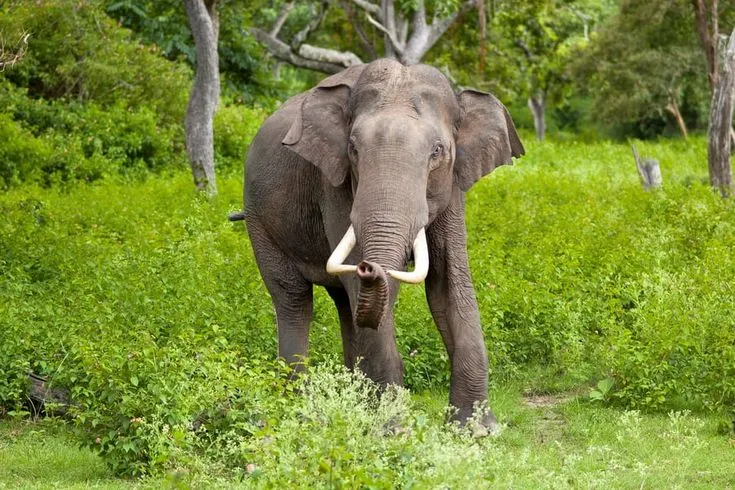
- Nilgiri tahr, close. Not a distant silhouette. They graze beside the paved trail and are habituated to people, which is the nearest thing to a certainty wild animals offer. It is still not a promise, and the department's own rules say sighting is a matter of chance.
- Anamudi, 2,695 m. The highest peak in India south of the Himalaya sits inside the park and is visible from the trail. You cannot climb it. The summit is core forest and closed to visitors, and the view from the path is what everyone means anyway.
- Shola grassland. Roughly 70% of the park is grassland broken by pockets of stunted evergreen shola in the valleys. It looks like nowhere else in Kerala and it is the habitat the whole park exists to protect.
- Newer additions. For the 2026 season the park introduced a medicinal garden of around 200 plant species, a rainbow bridge and dedicated photo points, after being picked in 2025 as the best-managed national park among 438 protected areas in India.
- Birds and the small stuff. The park has recorded 132 bird species including Western Ghats endemics such as the Nilgiri pipit and the black-and-orange flycatcher. Binoculars earn their space in the bag here.
The Neelakurinji question, answered honestly
Every year somebody arrives in Munnar hoping to see the hills turn blue. Neelakurinji mass-blooms roughly once every 12 years. The last recorded mass bloom was 2018 and the next is expected around 2030. Small, scattered flowering happens in between, and photographs of it circulate as though it were the main event, but the hillside-wide bloom is not something any operator can put on a 2026 or 2027 itinerary.
If someone is selling you a Munnar trip on the promise of Neelakurinji this season, that is the moment to ask a harder question. Go for the tahr, the grassland and the view of Anamudi, all of which are there every open day of the year.
When to go, month by month
For what it is worth, late September through November is the window most people underrate. It is the same reason the rest of the Western Ghats is at its best just after the monsoon: everything is still green, the light is better, and you are not queuing behind three coaches.
| Window | What it is like |
|---|---|
| April to May | Reopening and peak domestic season. Clear mornings, warm afternoons, busiest queues of the year. Book ahead. |
| June to August | Southwest monsoon. Green at its most dramatic, visibility unreliable, short-notice closures possible in heavy rain. |
| September to November | The quiet sweet spot. Rain easing, grassland still green, mist that lifts through the morning, thinner crowds. |
| December to January | Cold, crisp and clear, and the other peak. Layers are not optional at this elevation in the early morning. |
| February to March | Closed for tahr calving. Plan Munnar without Rajamala, or move your dates. |
How to build a Munnar day around it
Eravikulam takes about two and a half hours including the bus and the walk. That leaves most of a day, and the mistake is filling it with another twenty minutes of tea slopes. The interesting move is to keep driving north.
In roughly 60 km the road crosses from Eravikulam's wet grassland into Marayoor, the only natural sandalwood forest in Kerala, where the Muniyara dolmens stand unfenced in the trees, and then out into Chinnar Wildlife Sanctuary on the Tamil Nadu boundary, which sits in the rain shadow and looks like a different state entirely. Chinnar requires a forest guide taken at the check post, so it is not a drive-through.
That is exactly the shape of the Eravikulam, Marayoor and Chinnar day on GoExplorer: a 7 am pickup to be near the front of the Rajamala queue, the vehicle waiting while you are inside the park, the tea museum on the way back down, lunch at Marayoor and the forest guide at Chinnar. The vehicle is booked for your group rather than per head, and the forest department's fees stay where they belong, paid at the counter. If Rajamala is closed on your date, you hear about it before you travel.
If your trip is shorter, the two other Munnar days worth knowing are the classic Mattupetty, Echo Point and Top Station run, and the quieter Attukad falls and Chinnakanal road. All of them sit on the experiences page alongside the rest of the Western Ghats.
The rules inside, in plain language
- No food or drink past the gate. The department prohibits carrying food and beverages into the park. Eat before or after.
- Plastic free. Not a suggestion. Leave bottles and wrappers in the vehicle.
- Stay on the marked trail. Unauthorised trekking and picnicking inside the park is an offence under the Wildlife Protection Act, not a rule staff will wave through.
- Do not feed or crowd the tahr. Animals that have stopped fearing people are not tame animals. Keep your distance and let them set it.
- Keep the noise down. No music, no horns. It is a small trail and everyone else came for the same quiet.
What to carry
A warm layer, because 2,000 m at 8 am in Munnar is genuinely cold and most people pack for Kerala rather than for altitude. Sun protection for later, since the grassland has no shade. Water, though you drink it before the gate. Cash for the counters. Binoculars if you own them. Shoes with some grip, even though the trail is paved, because it is often wet.
If you are travelling with very small children, know that this is a short walk attached to a long car day. It suits families and it suits photographers, and it is worth being honest with yourself about which of those describes your morning.
Eravikulam is one of the few places in India where a serious conservation success is also a good morning out, and the reason it stays that way is the ticket cap, the 2 pm gate and the two months it closes. Plan around them rather than against them and it is the best two and a half hours in Munnar.