Alleppey Houseboat Booking: Day Cruise vs Overnight, the Mooring Rule and What a Licence Actually Means
Nearly every Alleppey day goes wrong in the same two hours, at the jetty, before anyone gets on a boat. Here is the difference between a shikara, a day cruise and an overnight houseboat, why every boat moors by evening, what Kerala's classification and pollution rules actually cover, and how to book the backwaters without losing your morning.
The Kerala backwaters are one of the few Indian landscapes that look exactly like the photographs. The problem is almost never the water. It is the ninety minutes before you reach it.
The standard Alleppey morning goes like this. You arrive at the main boat jetty without a booking because everyone said you could just turn up. Six people quote you six different rates for what sounds like the same boat. Nobody will say in writing how many hours you get, whether the boat can leave the main channel, or what lunch costs. You settle for a number that feels like a win, board at half past twelve, and spend the best light of the day still negotiating.
None of that is a scam. It is what an unpriced, unstandardised market looks like from the inside, and Alleppey is one of the clearest examples of it in Indian travel. This guide covers the three boats people confuse with each other, the clock that governs every cruise on Vembanad, what a Kerala houseboat licence and classification actually certify, what changed in April 2026, when to go, and how to arrange a backwater day that starts on time.
Three different boats, one word
Most confusion in Alleppey comes from the word houseboat being used for things that are not remotely the same purchase. There are effectively three, plus a fourth that nobody sells you but that locals actually use.
- Shikara. A small open motorboat with a canopy and cushioned seats, hired by the hour, usually for two to six people. It is the cheapest way onto the water, it can turn into narrow canals a houseboat cannot, and it has no kitchen, no bedroom and no toilet. Best for one to three hours.
- Day cruise houseboat. A full kettuvallam taken for the daylight hours only. You board late morning, you cruise, lunch is cooked on board, and you are off the boat by evening. No night on the water, and no overnight rate.
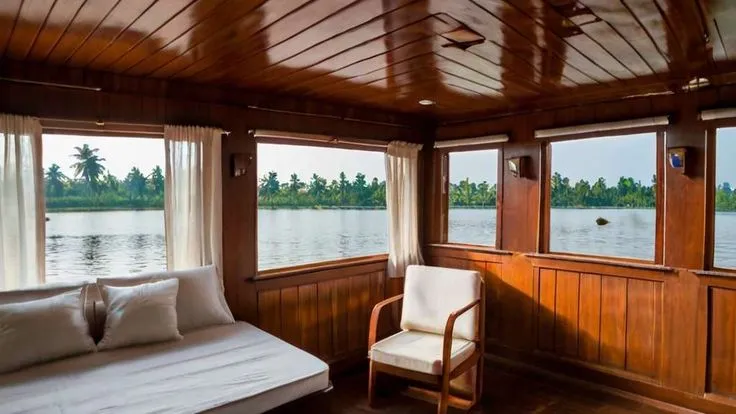
- Overnight houseboat. The same vessel, kept for a night. Board around noon, cruise the afternoon, moor before dark, dinner and breakfast on board, disembark the next morning. Worth knowing before you book: you are moored, not cruising, for the entire night.
- Country boat, or the public ferry. The state ferry between Alappuzha and Kottayam is a working local bus service across the lake, not a tour. It is the least comfortable and by far the most honest view of how the backwaters function as a place where people live.
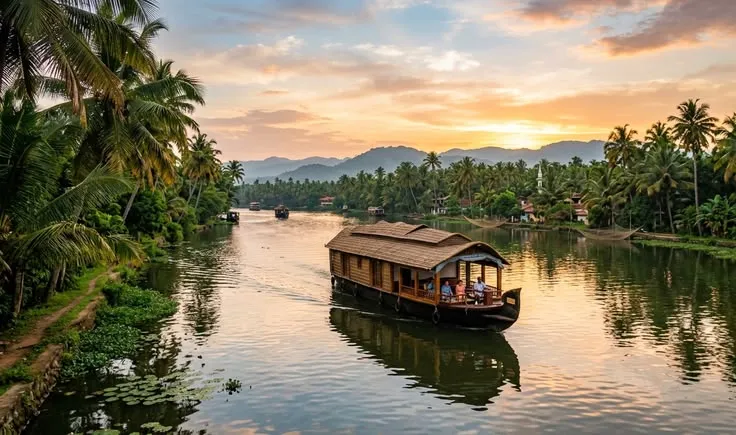
What a kettuvallam actually is
The boats are not a tourism invention, which is part of why they are worth taking seriously. A kettuvallam is a cargo barge. It ran rice and spices through the Kuttanad waterways long before anyone put a bedroom in one, and the name comes from the construction: planks tied rather than nailed, with coir rope through the seams and coconut fibre stuffed between.
Wikipedia's entry on the kettuvallam puts a traditional hull at roughly 30.5 m long and about 4 m across the middle, built mainly from anjili wood with a bamboo frame and woven bamboo matting for the roof. Converting one into a tourist boat meant raising the roof for headroom, laying a walking plank down the curved hull, and cutting windows. Modern boats are motorised, poled with bamboo in shallow water, and most now run bio-toilets rather than discharging straight into the lake.
That last detail is not a footnote. It is the single biggest live issue in Alleppey right now, and it has started to affect which boats are legally allowed on the water.
The clock is the product
Almost every complaint about an Alleppey houseboat is a timing complaint wearing a different hat. The cruise felt short. We only saw the wide bit. We spent the whole evening tied to a bank. All three are explained by the same schedule, which is broadly identical across every operator in town.
Boats board late morning rather than at dawn, and they stop moving well before dark. Operator listings across Alleppey consistently publish an anchoring cut-off in the early evening, commonly explained as a marine authority requirement so that night fishermen can lay their nets across the channels without a motor vessel running through them. Whatever the exact instrument, the practical effect is fixed: there is no night cruising on these routes, and a boat that promises it is either mooring and calling it cruising or is not a boat you want to be on.
| Stage | Typical time | What is actually happening |
|---|---|---|
| Boarding | Late morning, around 11:00 to 12:00 | Crew have cleaned and provisioned since the previous night's guests left |
| Cruising | Midday to late afternoon | The only window in which the boat is moving. This is the whole product |
| Lunch | Early afternoon, on board | Cooked while under way, usually a Kerala meal with fish |
| Anchoring | Early evening, before dusk | Moored to a bank for the night. Not negotiable, and not the operator being lazy |
| Overnight | Dusk to next morning | Stationary. Dinner, sleep, breakfast, disembark |
Why a day cruise beats an overnight for most people
This runs against the standard advice, so it is worth being specific. An overnight houseboat is a genuinely lovely thing if what you want is a quiet, dark night on water with nothing to do. Plenty of people want exactly that, and they should book it.
But a large share of travellers book overnight because they assume it means more backwaters, and it does not. It means the same afternoon of cruising, then twelve stationary hours at a mooring point where several other boats are usually tied up alongside, then a short run back in the morning. If your reason for coming is the water, the canals and the villages, the daylight hours are where all of it happens.
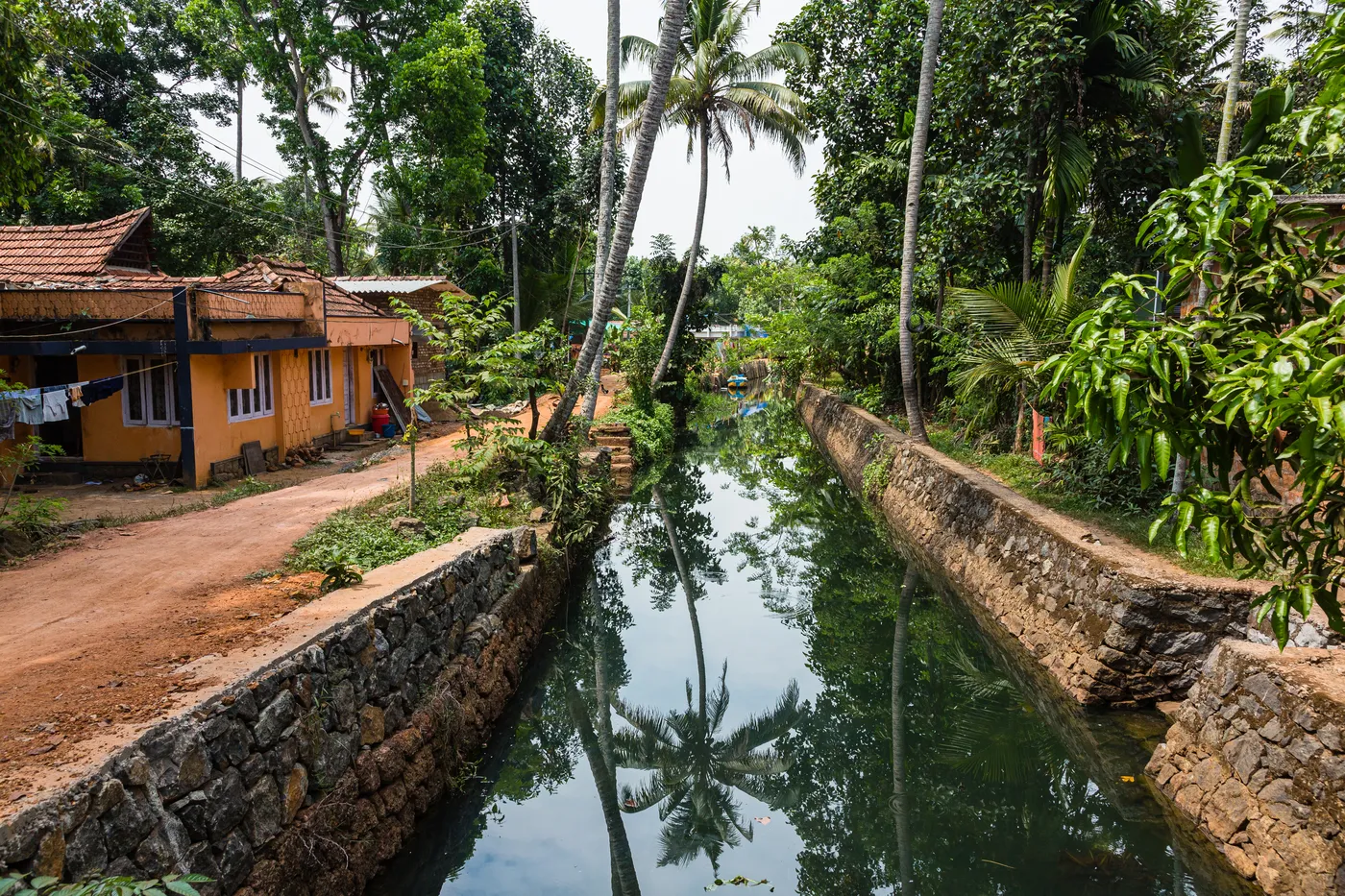
The second argument is about where the boat can go. Large houseboats stay on the main channel of Vembanad because they physically cannot turn in the village canals. Those canals, barely wider than the boat, with houses, churches, school jetties and washing steps on both banks, are the part everyone remembers. Boat size and route matter more than the number of bedrooms, and almost no listing leads with either.
Licensed, classified, certified: what each word covers
These three get used interchangeably in listings and they are not the same thing. Understanding the difference is the closest thing Alleppey has to consumer protection.
Registration is a Maritime Board matter and it is about the vessel being legally allowed to operate. This is where the backlog sits. In January 2024 a high level meeting chaired by the Chief Minister agreed to register more houseboats and to bring shikaras into the scheme, with a direction that boats be subjected to classification. In Onmanorama's report on that meeting, a representative of the Kerala Houseboat Owners Federation put the working fleet at nearly 800 boats on Vembanad and said roughly half of them were operating without a licence, adding that registrations had not been issued since 2013. That is an association's own estimate rather than an audited figure, and it is now over two years old, but it tells you the scale of the grey market you are buying into when you negotiate at a jetty.
Classification is Kerala Tourism grading the boat on facilities and standards. The department has run a houseboat classification scheme for years, and you will still see the older Silver Star, Gold Star and Green Palm labels in listings alongside a newer grading. Do not try to decode the label. Ask which certificate the boat currently holds and when it was issued, because an expired grade and no grade look identical in a WhatsApp forward.
Green Palm specifically is the eco-certification. Kerala Tourism's own guidance says green palm certificates go to operators conducting business ethically and professionally, and sets out what the department insists on: eco-friendly construction materials, clean storage, insect-free kitchens, biochemical treatment of solid waste, specified toilet provision for crew and passengers, encouragement to use solar, and firefighting equipment and lifebuoys as mandatory.
What changed in April 2026, and why it should change your questions
Vembanad has a load problem, and in 2026 it stopped being a discussion and became an enforcement action.
Following a High Court direction that houseboats failing to properly treat their waste must not operate on the lake after 19 April, the Ports Department began inspecting boats for valid pollution control systems and certification. Onmanorama reported that the first day's drive found one boat without valid documents and moved it to a yard, and that the checks were slow enough that few other boats were reached. Josna Philip of Carmel Engineering College, Punnapra, who has studied pollution in the Alappuzha backwaters, told the paper that both Vembanad and Punnamada are heading towards ecological degradation and that the number of houseboats now operating exceeds the lake's carrying capacity.
The industry's response was not denial. The same report says the All Kerala Houseboat Owners Association and the Kerala Houseboat Owners Federation have jointly introduced a bio-digestive system, developed with the National Institute of Standards and Technology, to treat kitchen wastewater as well as toilet waste, and put it on trial across selected vessels while seeking a six month window from the Pollution Control Board to roll it out further. The Federation is separately setting up a sewage treatment plant in the C Block area, and owners of older vessels argued they need time and a state-level mechanism to fit proper systems.
Two things follow for anyone booking. First, this is a lake under real pressure, and which boat you choose is a small environmental decision as well as a comfort one. Second, a boat's paperwork is now something that can put it in a yard mid-season, so the sensible question to a seller in 2026 is no longer just how much. It is what waste treatment the boat has and whether its certification is current.
- Is the boat registered, and can you send the registration and classification details before I pay?
- What waste treatment system is fitted, and is the pollution control certification current?
- How many hours will the boat be moving, and does the route leave the main channel?
- What exactly is included in the quote, and what will I be asked to pay on the day?
- What happens if the boat cannot run on my date, and who tells me?
When to go, and the one week to book early or avoid
November to February is the straightforward answer. Dry, comfortable, and the light on the water in the early afternoon is the reason people photograph this place. It is also when rates are highest and the popular boats go first.
March to May is hot and humid on an open deck, and the canals lose some of their green. June to September is the southwest monsoon, and this is a genuinely divisive call. The backwaters in heavy rain are beautiful, the palms are at their best, and there are far fewer boats. Against that, you will spend hours under cover, the light is flat for photographs, and operators moor earlier in bad weather. If rain does not bother you it is the most atmospheric season and the least crowded. If you are travelling a long way for one day on the water, it is a gamble.
August is its own category. The Nehru Trophy Boat Race is run on Punnamada Lake, the same water most cruises start from, and race week fills every room and boat in the district. The Nehru Trophy Boat Race Society held the 72nd edition on 22 August 2026. The race has traditionally been associated with the second Saturday of August but the date has moved in recent years, so check the society's own announcement for the year you are travelling rather than assuming. Snake boat racing on that scale is extraordinary, and turning up in Alleppey during it without a booking is not.
| Window | Conditions | Worth knowing |
|---|---|---|
| November to February | Dry, mild, best light | Peak season. Book boats and stays well ahead |
| March to May | Hot and humid | Quieter and cheaper, but an open deck at midday is hard work |
| June to September | Southwest monsoon | Green, empty and atmospheric. Earlier mooring in rough weather |
| August race week | Monsoon plus a crowd | The Nehru Trophy fills the district. Book months out or plan around it |
Alleppey or Kumarakom
The two sit on opposite sides of the same lake, and the honest difference is density rather than scenery. Alleppey is the town, the working port with the coir industry behind it, the largest concentration of boats, and the canals that run right through the middle of it. Kumarakom, across on the Kottayam side, is quieter, more resort-led, and has the bird sanctuary.
If you want the backwaters with a place attached, Alleppey. If you want the backwaters with a spa attached, Kumarakom. Most boats can pick up from either, so the choice is really about where you are sleeping on the nights either side.
Vembanad itself is worth understanding whichever side you start from. It is the longest lake in India and part of the Vembanad-Kol wetland, a Ramsar site, and the farmland behind the bunds at Kuttanad is worked roughly two metres below sea level, which is something done in very few places on earth. From a boat you are looking up at the fields.
How to book a backwater day that starts on time
Almost everything above points the same way: the failure mode in Alleppey is not a bad boat, it is an unplanned morning. Two fixes do most of the work. Arrange the boat before you arrive so the rate and the running time are settled rather than argued. And arrange the car, because every good thing in this district starts at a jetty a vehicle has to reach first.
That is the shape of the Vembanad backwater day cruise on GoExplorer. A nine o'clock pickup from your stay or from Alappuzha station, a run to Punnamada rather than to the main town jetty where the queue is, a boat booked in advance on a route that leaves the main channel for the village canals, and a car that waits at the jetty for the whole cruise so stepping off at four in the afternoon is not its own problem.
One thing that page does differently is worth flagging because it is the thing most listings fudge. The boat hire is not folded into the price. What is booked and paid for online is the vehicle, at a flat rate for the whole car rather than per head, and the boat is arranged in advance but settled at the jetty at its own published rate, along with lunch. Quoting a single all-in number and then adding a boat fee at the bank is exactly the practice these pages exist to avoid, so the split is stated on the page rather than discovered on the day.
The other two Alleppey days are worth knowing about because they solve the dead afternoons. The Alappuzha beach and lighthouse evening covers the coast almost every backwater visitor misses, including an 1862 lighthouse and a sea-facing sunset the backwaters cannot give you because they face the wrong way. The Ambalapuzha and Krishnapuram heritage run goes south to the Krishna temple and its palpayasam, and on to the Gajendra Moksha mural, one of the largest in Kerala. All three sit on the Alleppey destination page, and the wider experiences listing covers the rest of the country if Kerala is one stop on a longer route.
What to carry, and two expectations to set
Sun protection and a hat, because there is more glare off water than anyone plans for. Repellent for the late afternoon on the canals, which is when it matters. A dry bag or at least a sealed pouch for phones, in any month. Cash, because the boat, the lunch and anything you buy from a canal-side shop are settled locally. And something with sleeves for the evening if you are staying on the water.
Two expectations. The first is that the backwaters are a lived-in working landscape rather than a wilderness. You will pass rubbish, rebar, cable and people washing clothes, and it is genuinely better for it. The second is that this is a slow day by design. The boat moves at walking pace. If you are counting stops, you will be disappointed. If you are happy to sit still for four hours and watch a place go by, it is one of the best days in India.
The backwaters do not need to be improved. They need to be reached at the right hour, on a boat whose paperwork is in order, with the numbers agreed before anyone casts off. Sort that and Alleppey is exactly what the photographs promised. Leave it to the jetty and you will spend the best part of the day finding out what everything costs.