Rann of Kutch Season: Permits, Full Moon Nights and When the White Desert Is Actually White
The White Rann is underwater for part of every year, sits behind a border permit, and is a glaring white field at midday. Here is when the salt dries, what the 2026-27 season dates actually are, how the online permit works, why full moon nights get booked out, and how to plan a Kutch trip that is not just two hours on the salt.
If you searched for the Rann of Kutch today, in late September, and found photographs of a blinding white salt flat under a full moon, it is worth knowing that the place in those photographs does not currently exist. Right now a good part of the Great Rann is under standing water. It floods every monsoon, it dries through the autumn, and the white crust everyone travels for is a seasonal condition rather than a permanent feature.
That single fact drives almost every planning decision about Kutch, and it is the reason a trip here rewards being booked rather than improvised. The salt has a season. The festival built beside it has different dates from the salt. The flat itself sits inside a border zone and needs a permit written against your ID. And once you are standing on it, the difference between a memorable evening and a squinting disappointment is roughly four hours of clock.
This guide covers when the Rann is actually white, what the current season dates are and why published sources disagree with each other, how the permit works and where to get it, what full moon nights really change, what else in Kutch is worth the flight, and how to shape a trip around all of it.
The white is seasonal, and that is the whole planning problem
The Great Rann of Kutch is a salt marsh, not a sand desert. It covers roughly 7,500 sq km in Kutch district, is described by Wikipedia's entry as one of the largest salt deserts in the world, and averages about 15 m above sea level. During the southwest monsoon that flat semi-desert of salty clay and mudflat fills with standing water. In very wet years the wetland stretches from the Gulf of Kutch in the west across to the Gulf of Khambhat in the east.
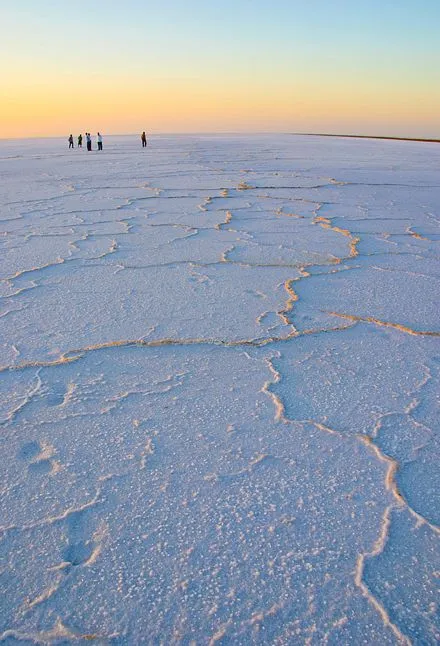
Then the rain stops, the water evaporates through the autumn, and what it leaves behind is a hard white crust of salt running to the horizon. That is the White Rann, or Safed Rann, and the stretch of it near Dhordo village is where visitors go. The Kutchi word rann itself points at this: land that becomes wet and dry by turns.
So the honest answer to when to visit is November to February, with the shoulders of October and early March doing real work depending on how the monsoon behaved that year. Summer is not a marginal call. This is one of the hottest parts of India, with temperatures peaking around 49.5 C, and winter nights at the other extreme can drop close to freezing. The region is also a Ramsar-listed wetland, designated in November 2002, which is a useful reminder that the thing you are walking on is an ecosystem with a calendar of its own.
Season dates for 2026-27, and why the sources disagree
Rann Utsav, the tent city and cultural festival that Gujarat Tourism runs at Dhordo, has published dates of 1 November 2026 to 7 March 2027 for the 2026-27 season on the official Rann Utsav website, rannutsav.net, which Gujarat Tourism itself names as the official site. The Tent City is operated by Evoke Experiences on Gujarat Tourism's appointment.
Here is the part that trips people up. At the time of writing, Gujarat Tourism's own Rann Utsav page still displays the previous season, 23 November 2025 to 20 February 2026, with the Tent City continuing to 4 March 2026. Government pages update on their own schedule, and reseller sites copy whichever version they found first, which is why a search throws up three different answers with equal confidence.
The practical rule: treat the official festival site as the source for festival and tent dates, expect state tourism pages to lag, and be suspicious of any third-party listing that states dates without naming where it got them. If you are booking flights around specific dates, confirm on the official site the week you book.
The festival, the tent city and the Rann are three separate decisions
A lot of confusion clears up once you separate these. The Rann is a place, open across the dry season to anyone with a permit. The Tent City is one accommodation option beside it, purpose-built, seasonal, and booked directly with the official operator. Rann Utsav is a programme of cultural performances, craft bazaars and activities that runs on published dates.
You do not need to be inside the festival to stand on the White Rann, and you do not need to stay at the Tent City to visit either. Plenty of travellers base themselves in Bhuj, which is the district's main town with the airport and railway station, and drive up for the evening. Whether that is the right call depends on what you came for. If the folk music, the crafts and the full programme are the draw, stay on site. If the landscape and the villages are the draw, Bhuj gives you a wider run at Kutch for less friction.
Bhuj to Dhordo is roughly 80 km north on the Khavda road, a straight and well-surfaced desert highway. It is an easy drive that gets steadily emptier, and the emptying is part of the effect.
The permit is the part people miss
The northern boundary of the Great Rann is the international border with Pakistan. It is patrolled by the Border Security Force, and access to the salt flat is regulated accordingly. Every visitor needs an entry permit written against original photo ID, and vehicles are charged separately.
- There is an official online portal. Gujarat Tourism's Rann Utsav page directs visitors to rannpermit.gujarat.gov.in for the online entry permit for the White Rann at Dhordo. Doing it in advance is the single easiest way to shorten your evening.
- Or you do it at Bhirandiyara. The on-route permit counter sits at the Bhirandiyara check post, before Dhordo. You present originals plus photocopies, fill the form, and the permit is issued there. It is not difficult, it just takes however long the queue ahead of you takes.
- Carry original ID, and copies. Aadhaar, passport, voter ID or driving licence. Originals are checked. Photocopies save time. A spare passport-size photograph is worth having in the bag.
- The counter keeps hours. Permits are issued through the day and stop in the early evening, and the exact cut-off shifts by season. This matters more than it sounds: turning up late for a sunset means arriving after the counter has closed.
- There is a fee, and it is small. It is charged per person, with lower rates for children, plus a separate per-vehicle charge. Published figures circulate widely but the district revises them, so treat any number you read online as indicative and check the portal or pay what the counter asks.
- Foreign nationals should allow more time. Requirements for non-Indian passport holders in border areas are handled differently and are worth confirming ahead rather than at the barrier.
Full moon, dark moon, or neither
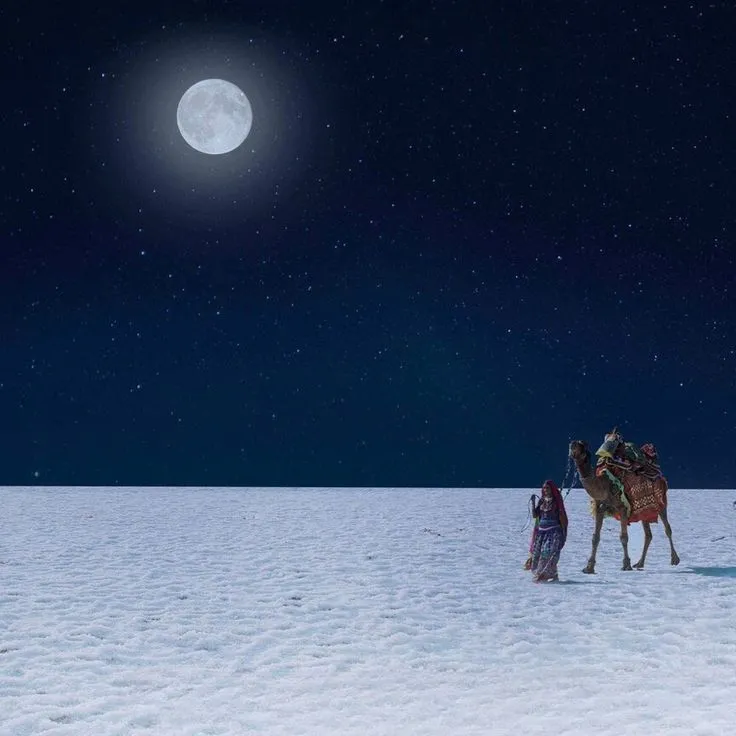
The full moon night is the image that sells Kutch. There is a real reason for it. On a cloudless full moon the salt holds light long after sunset, the horizon dissolves, and the flat reads as something closer to water or sky than ground. It is genuinely unlike anywhere else, and it is also the most heavily booked night of any month in the season.
Two things follow from that. First, if a full moon date is the point of your trip, book early, because tent availability and every decent stay in a 100 km radius tighten around those nights. The official festival site publishes a special dates page covering full moon, dark moon and the Diwali and Christmas periods, which is the list to plan against.
Second, the dark moon has quietly become its own draw. With no moon and no ambient light for tens of kilometres, the star field over the Rann is exceptional, which is the same logic behind the astro-tourism spots trending across India. If you care more about the Milky Way than the moonlight, the cheaper and emptier nights are the ones everyone else is avoiding.
And if your dates fall on neither, you have lost less than you think. Sunset on the salt does not require a moon.
Sunset is the point, and midday is a mistake
This is the most useful operational thing in this guide. At two in the afternoon the White Rann is a featureless white field under hard overhead light. It is hot, it is hard to look at, and it photographs as an overexposed blank. People do drive up at midday, spend twenty minutes wondering what the fuss is, and leave.
The last ninety minutes of daylight is what the place is actually famous for. The salt goes warm, then pink, then blue, the horizon stops being a line, and the temperature becomes pleasant. Which means the whole day has to be planned backwards from sunset: permit sorted, the 80 km covered, and you standing on the salt with time in hand before the light starts working.
Then remember there is nothing on the Khavda road after dark. No transport back, no lit stops, no alternatives. Whatever brought you up has to be waiting to take you home, and that constraint is why the evening is worth handing to someone whose job it is.
Month by month through the season
| Window | What it is like |
|---|---|
| June to September | Monsoon. The Rann fills with standing water and there is no white desert to visit. Kutch is still green and the Banni grasslands are at their best, but the salt is not the reason to come. |
| October | Drying out. Increasingly walkable as the month goes on, still warm, and genuinely quiet before the season opens. A gamble that pays off in a normal monsoon year. |
| November to December | The crust is hard and white, days are comfortable, and the festival season opens. Diwali and the Christmas to New Year window are the busiest and tightest of the whole season. |
| January | Peak conditions and peak cold. Clear light, best salt, and nights that can approach freezing. Pack far warmer than people expect of a desert in Gujarat. |
| February | Still excellent and beginning to warm. Flamingo numbers are strong. Arguably the best balance of conditions and crowds. |
| March onwards | The season closes and the heat arrives quickly. By April the region is heading towards temperatures that make daytime sightseeing unpleasant. |
Kutch is considerably more than the salt
Two hours on a salt flat does not fill a trip, and travellers who plan only the Rann end up with a lot of unbudgeted time in Bhuj. The district is one of the richest craft and heritage regions in India, and most of it sits within a day's drive of town.
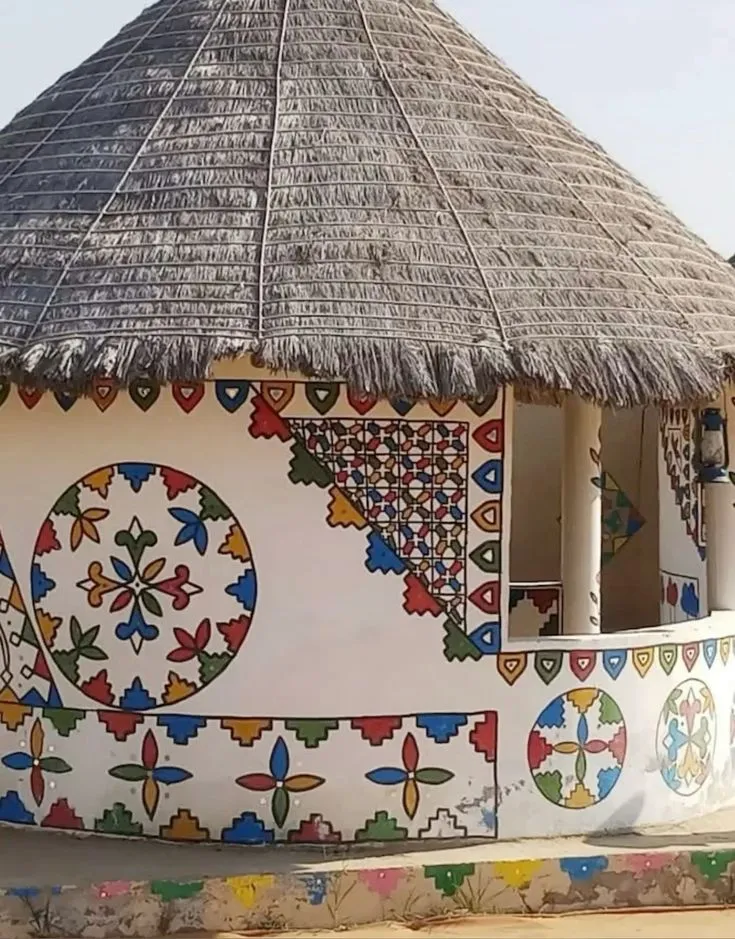
- The craft villages off the Khavda road. Round bhunga huts with painted mud walls, and households still working embroidery, bell metal and lacquer as trades. Kutch embroidery runs to distinct styles including Rabari, Ahir, Mutwa and Soof, several with mirror or bead inlay. You buy from the maker directly or you do not, and nobody pushes.
- Dhordo itself. Named one of the 54 Best Tourism Villages by UN Tourism in 2023, and the venue for the first tourism working group meeting of India's G20 presidency. It is known for mud craft and Mutwa embroidery quite apart from the festival.
- Bhuj's palaces. Aina Mahal, an eighteenth century hall of mirrors built by a Kutchi craftsman trained in Europe, and Prag Mahal, Italian Gothic in the middle of Kutch with a clock tower giving the best view of town. Both carry visible damage from the 2001 earthquake, which is part of what makes them affecting.
- Kala Dungar and Dholavira. The highest point in Kutch looks out over the Rann from above, and Dholavira, a major Harappan city and a UNESCO World Heritage Site, sits out on Khadir Bet island.
- Flamingos and the Banni grasslands. The Rann is a breeding ground for some of the largest flocks of greater and lesser flamingos anywhere. Birds arrive around December and leave towards the end of March, which overlaps neatly with the visiting season.
- Chir Batti, if you are lucky. Unexplained dancing lights reported at night over the Rann and the adjoining Banni grasslands for generations. Nobody can promise you these. Worth knowing they are a real local phenomenon rather than a tour operator's invention.
How to shape the two days that matter
The version of Kutch that works is usually two distinct days out of Bhuj rather than one long one, because the salt wants the late afternoon and the heritage wants the morning.
The first is the run north. Out of Bhuj in the early afternoon, a craft village on the Khavda road while the light is still high, the permit handled at Bhirandiyara, and two hours on the salt through sunset before the drive back in the dark. That is exactly the shape of the White Rann sunset run on GoExplorer: a one o'clock pickup for the sole reason that sunset is the product, the permit process handled by a driver who has done it before rather than by you at a counter, and a vehicle that waits through the evening and covers the 160 km return. It is booked per vehicle rather than per head, and the checkpost and camel cart charges stay where they belong, paid on the spot.
The second is Bhuj itself, in the morning, before the marble and the stone heat up. The Bhuj palaces and Hamirsar day covers the Swaminarayan temple, Aina Mahal, Prag Mahal and the Chhatardi cenotaphs, with palace entry and camera fees paid at each counter. It is the day most people skip and then regret skipping, because it is where Kutch stops being a landscape and becomes a place with a history.
Both sit on the Rann of Kutch destination page with the rest of what is bookable there, and the wider experiences listing covers the other destinations if Kutch is one stop on a longer route.
What to carry, and what to expect
Original photo ID and photocopies, for the permit. Sunglasses that you actually like, because glare off salt is relentless even late in the day. Sunscreen and something for your head. A warm layer, and then a warmer one than that if you are travelling in December or January, because the temperature on an open flat after sunset falls faster than anyone plans for.
Cash, for the checkpost, the camel cart to the viewing point and anything you buy from a maker in a village. Closed shoes, since the salt crust is abrasive and in places damp. And more water than the drive seems to justify.
Two expectations worth setting. The salt is not a smooth sheet of white porcelain; up close it is a crusted, cracked, faintly grubby surface that only resolves into the famous image at a distance and in good light. And the walk out from the car park is short. This is a place you stand still in and look at, not a place you hike across, and the people who enjoy it most are the ones who budgeted an evening rather than an activity.
The Rann of Kutch is one of the few landscapes in India that genuinely deserves the photographs, and almost everything that goes wrong on a trip here is a scheduling problem rather than a scenery problem: the wrong month, the wrong hour of the day, a permit counter that had closed, or a car that had already left. Sort the calendar and the clock, and the rest of it takes care of itself.