The Ooty Toy Train: Which Leg to Ride, How Booking Actually Works, and What to Do When It Is Full
The Nilgiri Mountain Railway is the only rack railway in India and the hardest ticket in the Nilgiris. Here is the difference between the two legs, why the advice to book three months ahead is now impossible, the shuttle timings between Ooty and Coonoor, what the monsoon does to the line, and how to ride it without losing a day.
Almost everyone who plans a trip to Ooty plans to ride the toy train. A much smaller number actually do. The gap between those two groups is not made of bad luck. It is made of three specific things nobody mentions until you are standing at a ticket counter being told no.
The Nilgiri Mountain Railway is not a tourist attraction with a turnstile. It is a working Indian Railways passenger service, on a line with very few seats, reached through the same booking system as any other train in the country, and shut down without notice whenever the hillside moves. It also has two completely different legs, and most visitors do not realise they are choosing between them until they have already picked the wrong one.
This guide covers what the railway actually is, which leg suits which kind of trip, how the reservation window really works in 2026, the shuttle timings between Ooty and Coonoor, what the monsoon does to the schedule, and what a sensible plan B looks like on the day.
What you are actually riding
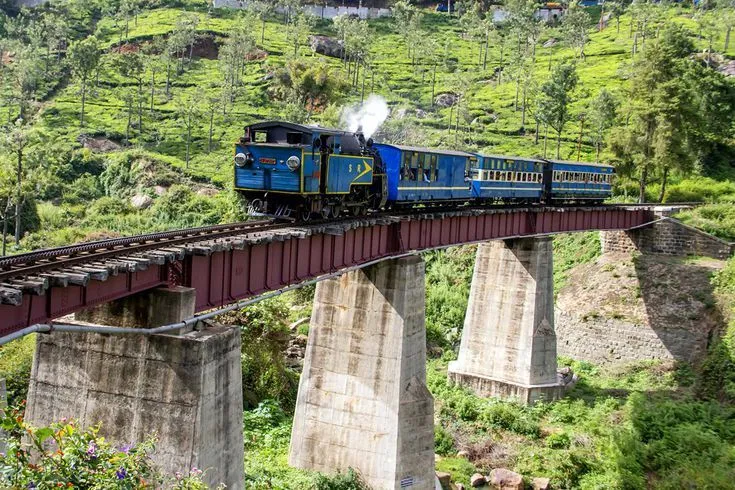
The line runs 46 km of metre gauge from Mettupalayam, on the plains near Coimbatore, up to Udagamandalam, which is Ooty's official name and its station code UAM. The lower section to Coonoor opened in 1899; the extension on to Ooty opened on 15 October 1908. It has been in continuous service since.
What makes it unusual is not its age. It is the only rack railway in India. Between Mettupalayam and Coonoor the train climbs using the Abt rack and pinion system, a toothed third rail laid between the running rails that a cogwheel under the locomotive bites into. The rack starts just past Kallar and it is what allows a gradient no adhesion railway could hold. The average in that section is about 1 in 24.5, and the steepest pitch is 1 in 12, which makes it the steepest track in Asia.
On that rack section the work is done by X Class steam locomotives, most of them built by the Swiss Locomotive and Machine Works at Winterthur, with the newest completed at the Golden Rock workshops in August 2021. The engine sits at the downhill end and pushes the carriages up, which is why the loco is behind you on the climb. Above Coonoor, where the gradient eases, diesel engines take over.
UNESCO added the line in July 2005 as an extension of the Mountain Railways of India World Heritage listing, alongside the Darjeeling Himalayan Railway. Some of the ceremony survives in small ways: card tickets in the old Edmondson style are still issued for the Ooty to Mettupalayam journey.
Two legs, two entirely different days
This is the decision that matters, and searching for the toy train rarely surfaces it clearly. There is the full run across the rack section, and there is the short hop at the top. They share a name and almost nothing else.
- Mettupalayam to Coonoor, the rack section. This is the engineering. Steam at the back, the cog biting in, tunnels, the Bhavani bridge, the climb out of the plains into the shola. It is also the leg that starts on the plains at dawn and eats an entire day. The full uphill run to Ooty takes roughly four and three quarter hours, and the descent about three and a half.
- Ooty to Coonoor, or the reverse. Nineteen kilometres, a little over an hour, diesel hauled, through tea slopes and the Ketti valley. No rack, no steam, far less drama, and by far the easier thing to fit into a trip you are already taking from Ooty.
So the honest way to choose is by where you are starting and what you came for. If you are arriving into the Nilgiris from Coimbatore or Chennai anyway, the full run up from Mettupalayam is the ride worth building the day around, and the through train is timed to connect with the Nilgiri Express arriving at Mettupalayam. If you are already staying in Ooty with two or three days on the plateau, the short leg is the sensible one, and the real question stops being the train and becomes how you get back.
The timings between Ooty and Coonoor
Four services run each way between Ooty and Coonoor on the published timetable, including the through train to and from Mettupalayam. These are the scheduled times rather than a promise: the railway revises them seasonally and cancels at short notice, so confirm on the day.
| Train | Direction | Departs | Arrives |
|---|---|---|---|
| 56139 | Ooty to Coonoor | 9:15 am | 10:20 am |
| 56142 | Ooty to Coonoor | 12:15 pm | 1:15 pm |
| 56137 (continues to Mettupalayam) | Ooty to Coonoor | 2:00 pm | 3:05 pm |
| 56140 | Ooty to Coonoor | 5:30 pm | 6:35 pm |
| 56141 | Coonoor to Ooty | 7:45 am | 9:00 am |
| 56136 (from Mettupalayam) | Coonoor to Ooty | 10:40 am | 11:55 am |
| 56143 | Coonoor to Ooty | 12:35 pm | 1:45 pm |
| 56138 | Coonoor to Ooty | 4:00 pm | 5:10 pm |
The through service is 56136, leaving Mettupalayam at 7:10 am and reaching Ooty at 11:55 am, and 56137 in the other direction, leaving Ooty at 2:00 pm and reaching Mettupalayam in the late afternoon. If you want the rack section under steam, those are the two trains that cross it.
Read the table again with a return journey in mind and the problem shows itself. Take the 9:15 down to Coonoor and the next train back is at 12:35, which gives you barely two hours in a town that deserves a day. Miss it and you are waiting until 4:00 pm. This is the single reason most Ooty itineraries quietly drop the train.
Booking: the advice you will read is out of date
Search for toy train tickets and a dozen pages will tell you to book two to three months in advance. That was reasonable advice once. It is now impossible.
Indian Railways cut the advance reservation period from 120 days to 60 days with effect from 1 November 2024. Sixty days, counted excluding the day of travel. Booking opens at 8:00 am IST on the opening day and, for a line with this little capacity, a meaningful share of the good dates goes in the first minutes. If a site tells you to book ninety days out, it has not been updated since 2024 and you should treat the rest of its advice with the same suspicion.
- Work out your opening date. Sixty days before travel, not counting the travel day itself. Put an alarm on it.
- Be ready at 8:00 am IST, logged in already. On the opening day IRCTC restricts general online booking in the first window to Aadhaar-authenticated user IDs, so verify your account well before you need it, not on the morning.
- Know the station codes. Mettupalayam is MTP, Coonoor is ONR, Ooty is UAM. Searching for Ooty by name does not always return Udagamandalam.
- Understand what you are booking. The reserved accommodation on these trains is small: twelve seats in first class and eighty-eight in second sitting, plus unreserved general coaches. That is the whole reason it sells out, and it is also why the fare is beside the point. This is a passenger train, priced like one. Seats are the scarce thing, not money.
- Tatkal is a separate roll of the dice. It opens one day before travel, at 11:00 am IST for non-AC classes. Worth trying, not worth planning around.
- The counter is a real option, within limits. Station counters sell tickets, including unreserved, and no one may buy more than four at a time there. On a weekday out of season this works. On a weekend, a public holiday or through April and May, it mostly does not.
What the monsoon does to the line
A booked ticket is not the same as a running train, and on this line that distinction has teeth. The NMR is cut into a steep, wet hillside, and it suspends services for landslips more or less every year.
Two recent examples from 2026 alone. On 2 January, heavy rain in Coonoor and parts of Ooty triggered landslips and boulders on the track, and services between Coonoor and Udagamandalam were cancelled. In May, the line was suspended from the 18th after landslips near Hillgrove station, and ran again four days later. Neither came with useful notice.
If you are reading this in late September, the timing matters. The Nilgiris sit in the path of the northeast monsoon, which typically runs from October into December and brings this region a large part of its rain. That window overlaps exactly with the post-monsoon travel season when the hills are at their greenest. It is a lovely time to be in the Nilgiris and a poor time to build an itinerary that only works if a specific train runs on a specific morning.
Plan B is a road, and it is a good one
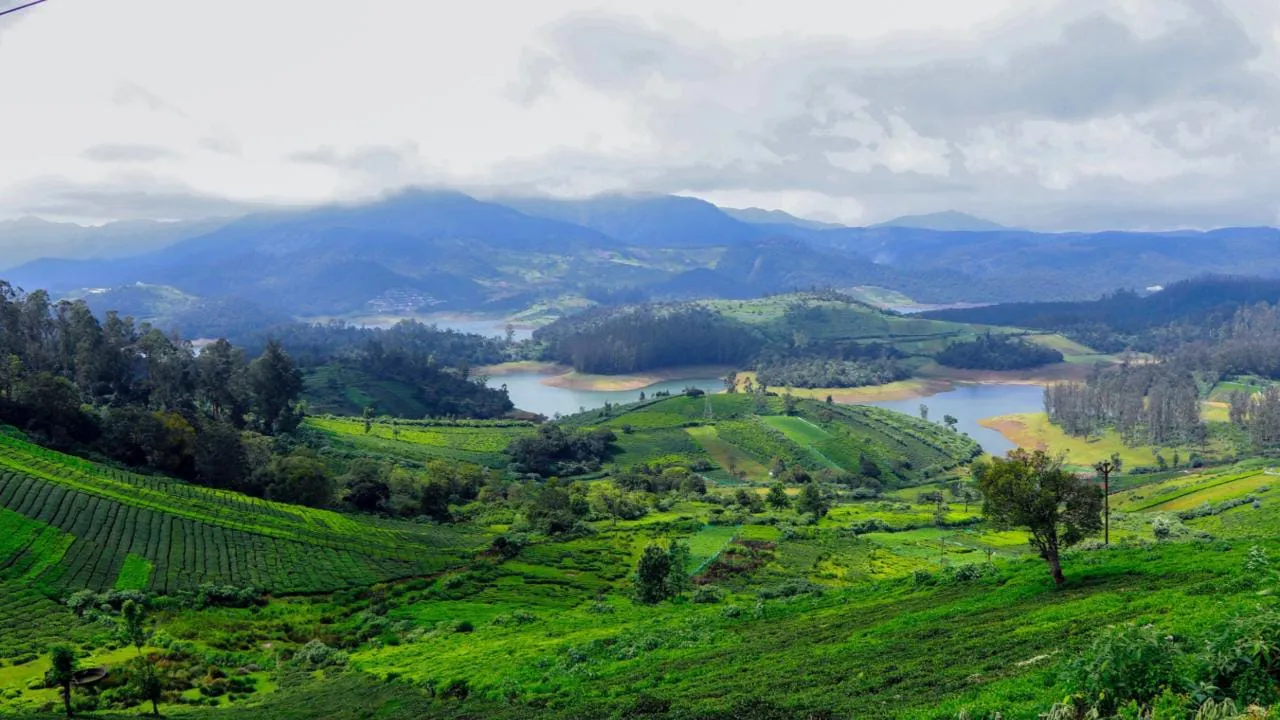
Here is the reframe that saves the day. The reason to go down to Coonoor is not only the train. The road between Ooty and Coonoor runs through some of the best tea country in south India, past working factories, and it is roughly forty minutes. If the train is full, cancelled, or simply at the wrong hour, the descent by road is not a consolation prize. It is the same landscape at your own pace.
Coonoor also earns the trip on its own. Sim's Park, Dolphin's Nose and Lamb's Rock above the Catherine falls gorge, Droog Fort with a climb at the end of it, the market, and tea factories that will walk you through withering, rolling and grading before selling you the result. Most visitors see none of it because they treat Coonoor as a railway platform rather than a town.
A workable shape for the day is train one way and car the other. Ride down in the morning, have the vehicle meet you at Coonoor station, and come back up through the tea with a factory and a museum on the way. That turns a one hour railway journey into a full day, and it removes the single point of failure, because if the train does not run the car simply drives the same descent.
Practical things about the ride itself
- There are no toilets on the train. Use the station before you board. On the full Mettupalayam run this is not a small detail.
- There is no catering. Carry water and something to eat. On the long leg, Hillgrove is the traditional refreshment halt.
- Windows are the point, and they are open. Carry a layer. The plateau is cold in the early morning even in April, and the carriages are not sealed.
- General class has no reserved seating. Boarding early is the only way to get a window, and the carriages fill.
- Sit on the correct side. Coming up from Coonoor to Ooty the valley views are better on the right in the direction of travel; going down, the left.
- Cash helps. Station counters do not reliably take cards.
- It is slow, and that is the product. Walking pace for long stretches. Anyone expecting a scenic express will be bored by minute twenty.
How it fits into a Nilgiris trip
Two or three days on the plateau is the usual shape, and the train is one of them rather than all of them. The classic Ooty day is Doddabetta first thing before the peak disappears into cloud, then the Botanical Garden before the coaches arrive, then the smaller gardens and the lake in the afternoon: that sequence is the whole Doddabetta and the Ooty gardens day. The other Ooty worth seeing is outside the town entirely, on the Pykara and Emerald roads, which is a longer drive and its own day in the Pykara and Emerald Lake run.
The railway day sits between them. The toy train and tea road day is built around exactly the problem this guide describes: the car drops you at Ooty station, drives down to meet the train at Coonoor, and brings you back up through the tea with a working factory, the Tribal Museum and the market on the way. The train ticket is not included and cannot be, because the railway sells it at the counter and does not release it to operators, but if the train is full or cancelled on the day the same descent runs by road and nothing else changes.
If Coonoor is where you are actually staying, the Coonoor viewpoints and market day and the Droog Fort and Ralliah Dam day cover the town properly. Everything bookable in the hills sits on the Ooty and Coonoor pages, and the wider experiences listing covers the rest of the south if the Nilgiris are one stop on a longer route.
When to go
| Window | What to expect |
|---|---|
| October to December | Green, cool and beautiful, and the northeast monsoon window. Highest chance of a landslip cancellation. Go, but keep the train flexible. |
| January to March | The most reliable running season and the clearest mornings. Cold at dawn on the plateau. Booking pressure is moderate outside long weekends. |
| April to May | Peak season. Extra summer specials usually run, and every seat on every service is contested. Book the instant the sixty day window opens. |
| June to September | Southwest monsoon. Fewer visitors, dramatic cloud and tea at its greenest, and a real chance of suspended services on the lower line. |
The Nilgiri Mountain Railway has been climbing this hillside for over a century and it is worth an hour of anyone's holiday. Just do not hand it your whole day. Book the sixty day window if you can, check the running status the night before, and have a car that can do the same descent if the answer at the counter is no. Plan it that way and the train becomes what it should be, which is a lovely hour in the middle of a good day, rather than the thing the day depended on.