Gir Safari Booking: The Permit, the Gypsy and the Guide Are Three Different Payments
Gir opened a week early this season, on 9 October. Here is what the forest department's e-permit actually buys, the two things you still have to pay for at Sinh Sadan, the 45 day booking window, why a confirmed permit cannot be changed, and the difference between the Gir Jungle Safari and Devalia.
Gir came back early this season. The Gir Jungle Safari usually reopens on 16 October, after a four month monsoon closure, and this year the forest department brought it forward by a week to 9 October because the rain was lighter than usual and the forest tracks dried out sooner.
Which means a lot of people are booking an Asiatic lion safari right now, in the run-up to the Diwali and winter holidays, and running into the same thing. You find the government portal, you pay, you get an e-permit by SMS, and you turn up at Sasan with a valid permit and no vehicle. Nobody misled you. In Gir the permit, the gypsy and the guide are three separate payments, to three different parties, at two different times.
This guide is the part the booking page leaves out: what the e-permit covers, what you pay at the counter, how far ahead the window opens, why a confirmed permit cannot be edited or refunded, what the three daily slots are, and the difference between the Gir Jungle Safari and Devalia that trips up almost every first-time visitor.
The season, and why it closes at all
The Gir Jungle Safari runs roughly from mid October to 15 June and shuts for the monsoon. The closure is not only about washed-out tracks. The monsoon months are the breeding season for lions and for much of the rest of the forest, and the forest department keeps visitors out so that vehicle noise and camera flash do not sit on top of it. The road condition is the reason the date can move; the biology is the reason there is a closure at all.
So the reopening is a departmental decision, not a fixed calendar entry. This season it came on 9 October rather than 16 October. Next season it may not. If you are booking for a date in the first or last fortnight of the season, check the portal rather than a blog, including this one.
Three payments wearing one name
This is the single most useful thing to understand before you open a booking page.
The e-permit you buy online is park entry for named people, in a named slot. It is issued by the Gujarat forest department through the Gujarat State Lion Conservation Society, and the department says plainly on its own FAQ that the permit does not include the locally available facilities. Those facilities are the two things that actually carry you into the forest.
Private vehicles do not enter the safari zone. Inside Gir you travel in an open gypsy registered with the forest department, with a trained local guide, and both are arranged at the reception counter at Sinh Sadan in Sasan and paid there, usually in cash. A guide is compulsory, not an upsell.
| What | Paid where | Indian visitors | Foreign visitors |
|---|---|---|---|
| E-permit, Monday to Friday | Online, in advance | Rs 800 | Rs 5,600 |
| E-permit, Saturday, Sunday and festival days | Online, in advance | Rs 1,000 | Rs 7,000 |
| Gypsy hire | Sinh Sadan, on the day | Rs 2,000 | Rs 2,000 |
| Guide fee, per trip | Paid directly to the guide | Rs 400 | Rs 400 |
| Camera fee, amateur | Sinh Sadan, if charged | Rs 200 | 20 times the current dollar rate |
One e-permit covers up to six adults plus one child between three and twelve, and a gypsy takes the same. That is the number that decides your per-person cost. Six adults sharing one permit and one gypsy pay very differently from a couple who pay for the whole vehicle themselves. If you are a group of eight, you need two permits and two gypsies, and they are booked separately, which is worth knowing before you promise everyone a seat.
Weekend and festival dates carry the higher permit rate. Diwali week is a festival-rate stretch and also the busiest, which is the worst possible combination if you are booking late.
45 days, and no second chances
The booking window is narrower than most people assume and the rules around it are unusually strict.
- The window opens 45 days ahead. The forest department's FAQ puts the maximum at 45 days in advance, and the minimum at two hours before the slot if seats are still available. Widely repeated figures of 90 days or 30 days are not what the department publishes.
- A generated e-permit cannot be changed. The department's answer on refunds against cancellation is that no further changes apply to an already generated e-permit. Treat the permit as non-refundable and non-editable: wrong date, wrong name spelling, wrong slot, and you buy another one.
- It is issued against ID, and the ID is checked. Aadhaar, passport, voter ID or driving licence, entered per person at booking. Carry the original of whatever you booked with, for everyone on the permit.
- There is no tatkal. The portal says so on its own homepage. There is no emergency queue, no counter release, nothing to turn up and hope for.
- Tour operators cannot bulk-book. The department restricts the system to eco-tourists and prohibits bulk booking from a single point. Anyone promising you guaranteed permits in volume is not working inside the rules.
Three slots a day, and you do not choose your route
Gir runs three safari slots a day through the week, and the clock shifts with the season.
| Season | Slot 1 | Slot 2 | Slot 3 |
|---|---|---|---|
| Winter, mid October to end February | 6:45 am to 9:45 am | 8:30 am to 11:30 am | 3:00 pm to 6:00 pm |
| Summer, 1 March to 15 June | 6:00 am to 9:00 am | 8:30 am to 11:30 am | 4:00 pm to 7:00 pm |
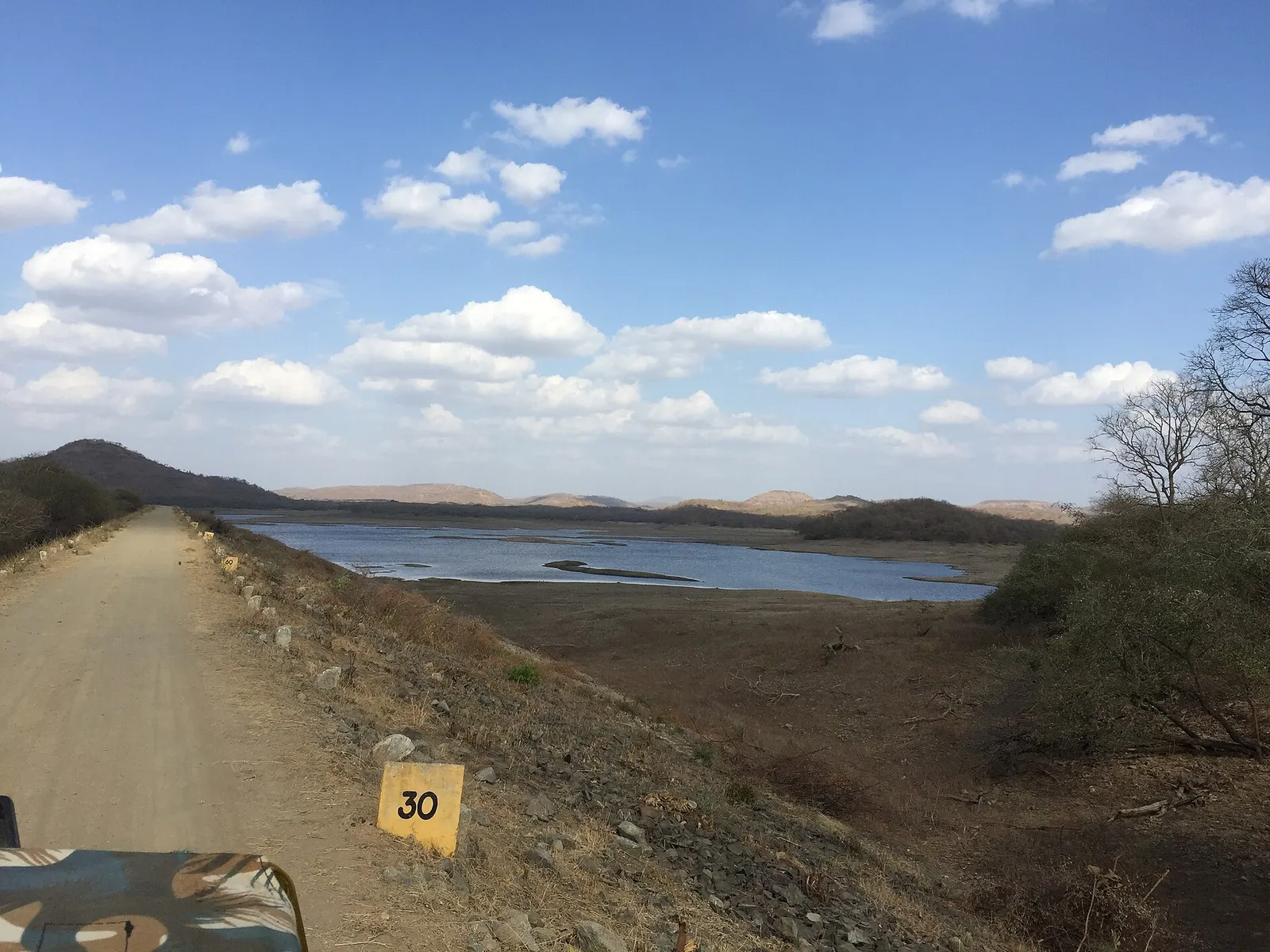
Report at the Sinh Sadan reception counter around half an hour before your slot. That is where the gypsy and the guide are assigned, and where your route is assigned too. The tourism zone runs through the Dedakadi and Sasan ranges with several marked routes of about 35 km each, and the department allots one at reporting. You cannot pick it when you book, and you cannot pick it at the counter either. Every route is built to cross the main habitat types, and there are artificial water holes along them, which is what keeps sighting rates reasonable.
The first slot and the last slot are the ones to want. Lions move in the cool hours, and the middle morning slot is the one most likely to be three hours of beautiful empty teak forest.
Devalia is not Gir, and that is the point
The second booking line on the portal is the Gir Interpretation Zone at Devalia, about 13 km from Sasan village. It is a 412 hectare enclosed area, fenced out of the larger forest, holding lions, leopards behind an open moat, spotted deer, sambar, nilgai, blackbuck, jackal, jungle cat and a lot of birds. The department describes it as a mini version of Gir, built for conservation education.
That phrasing matters. Devalia is not a smaller Gir Jungle Safari. It is a different product with a different promise, and travellers who book it expecting the other one come away either relieved or disappointed depending entirely on what they wanted.
| Gir Jungle Safari | Devalia, the Interpretation Zone | |
|---|---|---|
| Where | Open forest, Dedakadi and Sasan ranges | Enclosed 412 ha zone, 13 km from Sasan |
| How long | About three hours, roughly 35 km of track | Under an hour |
| Vehicle | Registered open gypsy with guide only | Forest department mini bus, or a private gypsy with an eco-guide |
| Sightings | Wild animals in a forest. Frequent, never promised. | Reliable, in a managed area |
| Season | Closed through the monsoon | Open through the year, closed every Wednesday |
| Permit, Indian visitors | Rs 800 weekday, Rs 1,000 weekend and festival | Bus from Rs 150 weekday, Rs 190 weekend and festival |
The honest recommendation is to do both if you have the time, and in that order. Devalia in the late afternoon of your arrival day gives you a clear look at the species list, including a leopard you will almost certainly not see in the open forest. The Jungle Safari the next morning gives you the forest. Doing Devalia second tends to feel like an anticlimax.
Devalia is also the fallback worth knowing about. It is open through the monsoon when the Jungle Safari is shut, and the bus ticket is a fraction of the jungle permit. If your permit dates fell through, this is the thing to book. Just note the Wednesday closure, which catches people out, and note that the department's own pages list more than one figure for private gypsy hire at Devalia, so confirm that at the counter rather than from any website.
The two gates nobody searches for
If the Sasan slots are gone for your dates, the same portal sells two more lion safaris that almost nobody books, and both are real forest rather than enclosure.
- Ambardi Safari Park, in the Gir East division near Dhari in Amreli district. Slots run morning and afternoon, and the permit sits at the lower Devalia-style rate rather than the Sasan one. A long way round from Sasan, but a genuine option from the Amreli side.
- Girnar Nature Safari, at Dolatpara just outside Junagadh. Girnar has its own resident lions, the slot structure mirrors the Gir Jungle Safari, and the permit and gypsy rates match it. If you are already spending a morning on Junagadh's monuments, this is the shortest hop to a safari in Gujarat.
- Velavadar, the Blackbuck National Park near Bhavnagar, is also on the portal. No lions, but the harrier roost in winter is one of the better bird spectacles in western India and almost nobody goes.
There is exactly one official site, and the rest are agencies
Search for Gir safari booking and the first page fills with domains built to look official. Many of them are competent operators who will genuinely book on your behalf. None of them are the forest department, and the department has put a warning on its own homepage about sites claiming to provide confirmed permit bookings at premium rates.
The only official booking system is girlion.gujarat.gov.in, run by the Gujarat State Lion Conservation Society. You register with an email and mobile number, verify an OTP, pick the safari, the date and the slot, enter the ID details of each visitor, and pay. The confirmation arrives by SMS to the registered number, and the permit can be re-downloaded from your booking history if the print fails.
If you are paying what you believe is a government fee, check the address bar. If you are paying an agency, know that you are paying an agency, and ask which part of the three payments their price actually covers. That ambiguity is where most of the unhappiness in this market lives, and it is the same pattern we traced across the country in why booking travel experiences in India is still hard.
What you will actually see
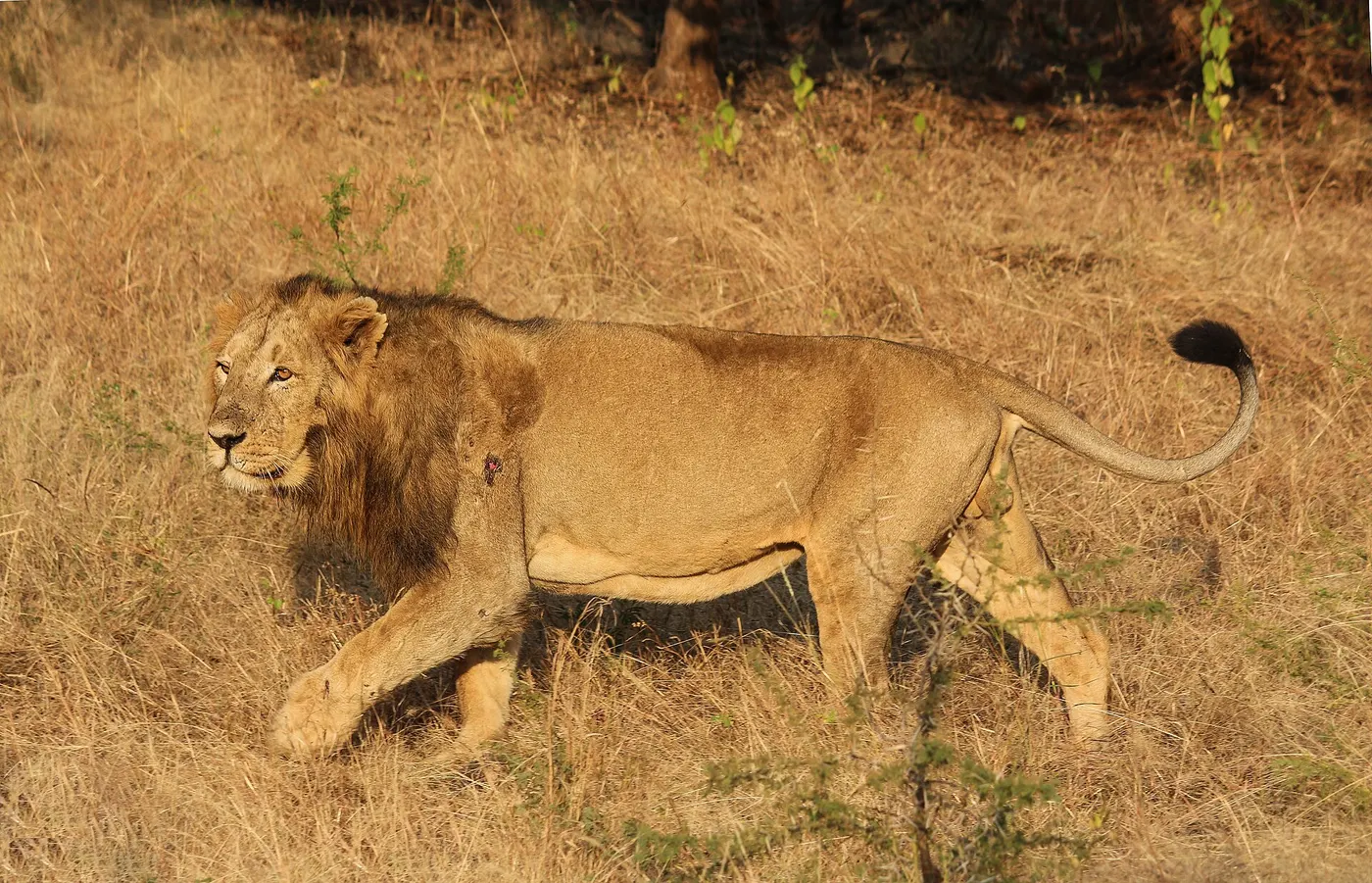
Gir is the only place in the world with wild Asiatic lions, and there are more of them than there have been in living memory. Gujarat's 16th lion census, conducted over four days in May 2025 across roughly 35,000 sq km of Saurashtra, counted 891 lions, up from 674 five years earlier.
The detail inside that number is the one that changes how you plan. Of the 891, 384 were inside Gir National Park and the sanctuary, and 507 were outside the protected area, spread across eleven districts including coastal and non-forest country. The lions have outgrown the park. It is the conservation success story of Indian wildlife and also the reason why a sighting on a given morning is still a matter of luck: the population is up, the tourism zone is a slice of the range, and the forest is dense dry teak, not open grassland.
Sightings in the Jungle Safari are frequent. They are never guaranteed, nobody can guarantee them, and a guide who promises one before you set off is selling you something. Besides lions, the forest holds leopard, which is harder, along with sambar, chital, nilgai, chowsingha, wild boar, jackal, striped hyena, marsh crocodile at the Kamleshwar dam and more than 300 bird species.
Building a day around the permit
The practical problem with Sasan is that it is a village at the edge of a forest. There is no ride-hailing worth the name, rentals are scarce, and the nearest town of any size is Junagadh, about 55 km away. A permit for the afternoon slot leaves you with an entire empty morning and nothing to flag down.
Junagadh fills it well, and it is genuinely worth the drive:
- Uparkot Fort, the old citadel, reopened in 2023 after a long restoration. The Buddhist rock-cut caves, the two great stepwells at Adi Kadi Vav and Navghan Kuvo, and the ramparts are a comfortable two hours.
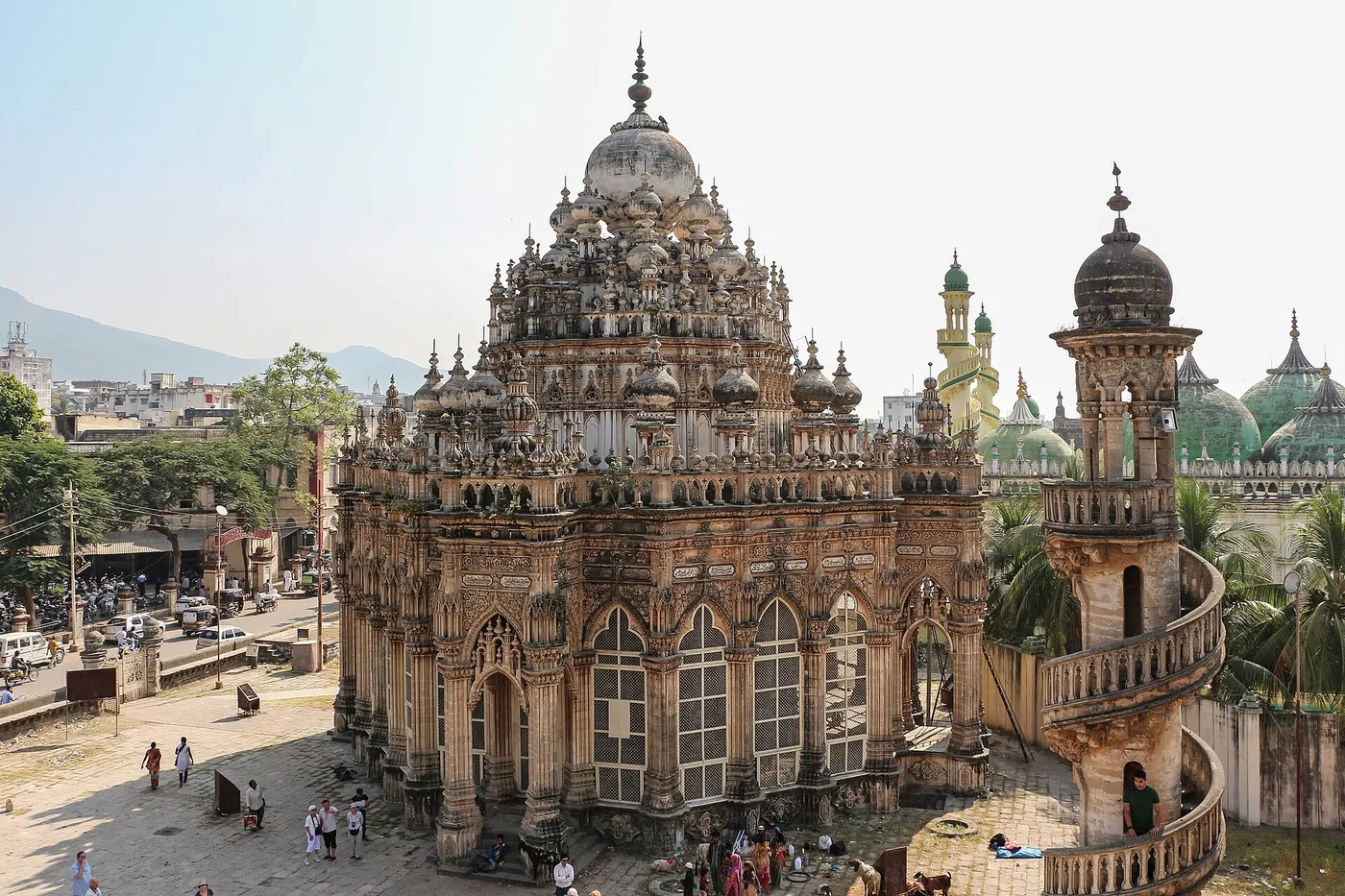
- Mahabat Maqbara, the nineteenth century mausoleum of the Nawabs, with staircases spiralling around the outside of the minarets. Thirty minutes, and one of the most photographed buildings in Gujarat.
- Ashoka's rock edicts on the Girnar road, carved into a granite boulder in the third century BC and easy to drive straight past. Twenty minutes.
- Back at Sinh Sadan by the reporting time, which is the whole reason the day is planned backwards from the slot rather than forwards from breakfast.
We run exactly that day as Junagadh and the Gir Jungle Trail: a private car and driver from your stay in Sasan, Junagadh in the cool hours, back at Sinh Sadan half an hour before the afternoon slot, and the car waiting while you are inside the forest. We do not sell the permit, the gypsy or the guide, and we are clear about that on the page. Those are yours to book and pay, and the price you see from us is the car for the day, flat, whatever the size of your group.
Sasan also sits at one end of the Saurashtra pilgrim coast, which is a better trip than a single safari. Dwarka, Somnath and Gir covers the three days out that string it together, and the Rann of Kutch season guide covers the other half of a Gujarat winter. If you want to compare the booking mechanics with India's other great wildlife park, Kaziranga splits the permit and the jeep the same way, for the same reasons.
You can see all three Saurashtra days on the Dwarka, Somnath and Gir page, and the rest of the country on all experiences.
Quick answers
- When did Gir reopen for the 2026 to 2027 season? 9 October 2026, a week ahead of the usual 16 October, because the monsoon was lighter than normal and the forest tracks were ready early.
- Where is the official booking site? girlion.gujarat.gov.in, run by the Gujarat State Lion Conservation Society. The department warns on that homepage about sites offering confirmed permits at premium rates.
- Does the e-permit include a jeep? No. The permit is park entry for named people. The registered gypsy and the compulsory guide are arranged and paid at the Sinh Sadan reception counter on the day.
- How far ahead can I book? A maximum of 45 days in advance, and at least two hours before the slot if seats remain.
- Can I change or cancel a permit? No. The department's position is that no further changes apply to an already generated e-permit. Check the date, the slot and every name before you pay.
- What does it cost? The permit is Rs 800 on weekdays and Rs 1,000 on weekends and festival days for Indian visitors, plus Rs 2,000 for the gypsy and Rs 400 for the guide. Camera fees apply where charged. Confirm current rates on the portal.
- How many people on one permit? Up to six adults plus one child aged three to twelve, which is also what a gypsy holds. Larger groups need more than one of each.
- What are the slot timings? Three a day. In winter, 6:45 to 9:45 am, 8:30 to 11:30 am and 3:00 to 6:00 pm. From 1 March the first slot moves to 6:00 am and the afternoon to 4:00 to 7:00 pm.
- Can I choose my safari route? No. Routes are allotted when you report at Sinh Sadan, not when you book.
- Is Devalia the same as the Gir safari? No. Devalia is an enclosed 412 hectare interpretation zone, under an hour, with reliable sightings, open all year but closed on Wednesdays. The Jungle Safari is three hours in open forest.
- Am I guaranteed a lion? No, and nobody can promise one. Sightings are frequent in the tourism zone but it is a wild forest.
- What if the Sasan slots are sold out? Devalia, Ambardi near Dhari and the Girnar Nature Safari outside Junagadh are all on the same portal and all far less contested.
- How do I reach Sasan Gir? Rajkot is the nearest useful airport at about 160 km, with Diu and Ahmedabad as alternatives. Junagadh is about 55 km away by road and Sasan has its own small railway station.
- Is a camera allowed? Yes, with an amateur camera fee where it applies. No drones, as in any protected area.